Blog

Knowing God

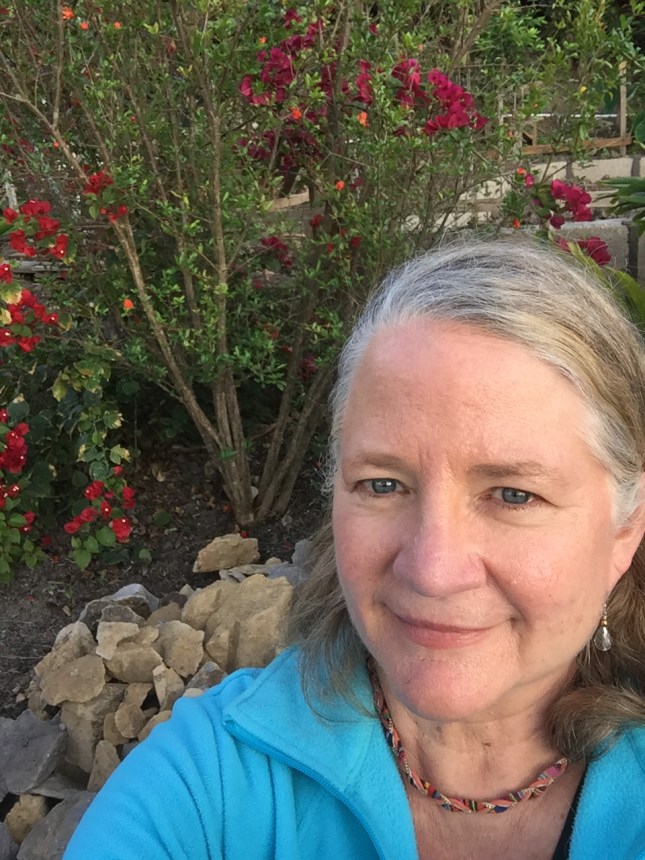
Nic flowers

Once I calmed myself enough to help a tiny chickadee who’d flown into our cabin and couldn’t find her way out. She perched on my thumb for all of 60 seconds while I carried her out then set her free.

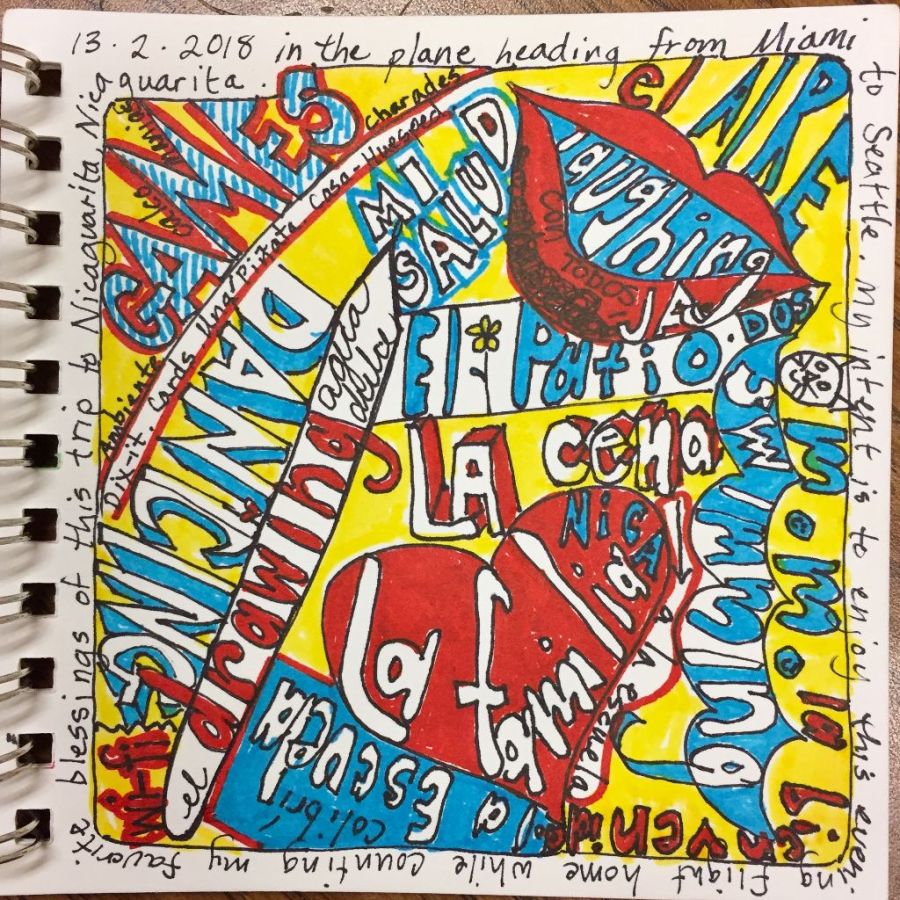
Yesterday we found the one hour of late afternoon sunshine to walk a two mile loop of the beach. Fierce howling wind and rain had surrounded us most of the day as we watched transfixed from our nest—snug second-floor living spaces at the beach cabin. Bundled up and finally outside, we walked then gazed in awe at the ragged bright-white caps and rainbow framing an ocean that reaches halfway around the world. We’re inside again now and it’s hailing—giant balls—through the sunshine. Somewhere out there is another rainbow.

Thus, and there are zillions of such stories over my lifetime, I have known God through nature—when I was young walking a trail with my parents and sisters and spotting one shiny orange salamander after another, being awakened in the middle of the night by howler monkeys in the tropics or hippos on a savannah, soloing through whitewater or up a rock face. Lately the majesty has extended to man-as-God creations: the music in La Misa Campesina, the mix of Latin tunes my son made for me, Sagrada Familia, the poems of Mary Oliver.

By extension, behaviors have allowed me to sit in God’s lap, to use a metaphor. Years and years of serving others—children and families through special education, health access programs, worshipping and discerning with Spanish speakers.

More recently, these behaviors have become less deed-like and more quiet and solitary. Just God and me, God in me, God as me: consistent journaling and meditation practice every morning, breath and body exercises, swimming and dancing, often alone. As a result I know the way forward.

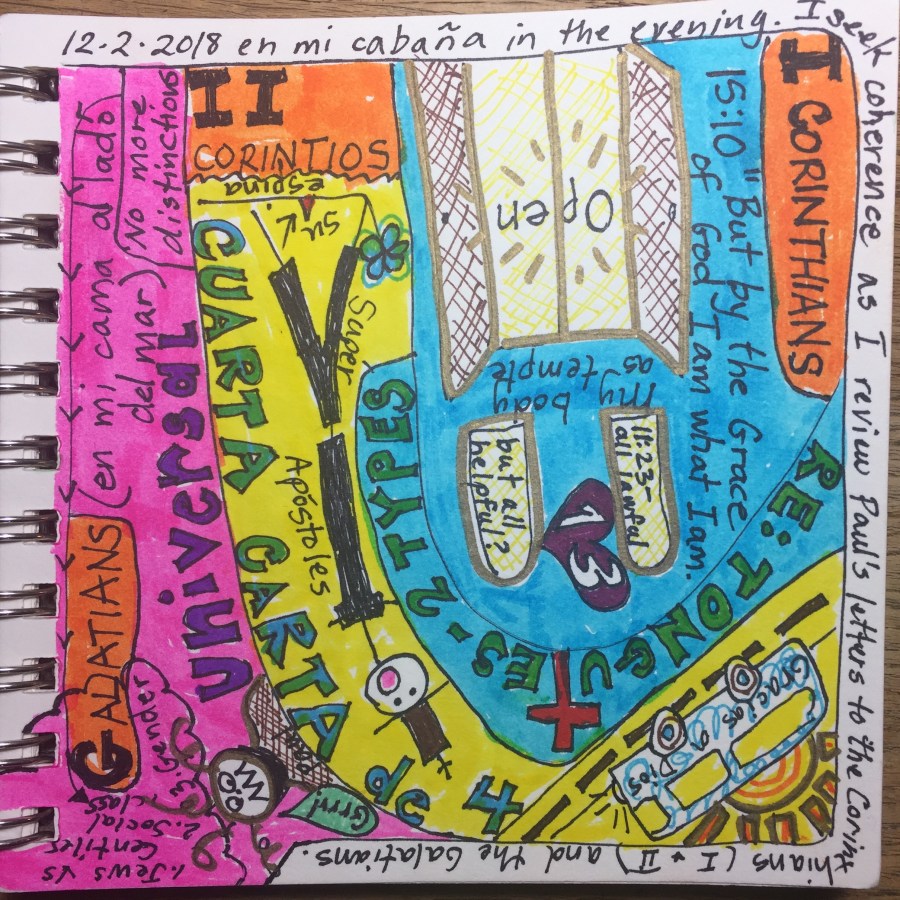
For instance, the time recently when I was riding along with Franklin from Matagalpa to Masaya: I had planned to complete my theology homework while in Nicaragua. In fact, I’d planned ahead and brought my thin Spanish/English New Testament along, the one I borrowed from the Gideons last spring in a Florida hotel. I had already read the commentary from the heavy textbook that I sensibly left at home. I did bring notes with me though, brief summaries about I and II Corinthians and Galatians on post-its. I’d also copied the essay for the meeting after I returned so I could read it on the plane coming home and be ready. But the scripture reading itself of those three letters written by Paul just wasn’t happening. A few verses was a fine sedative but that’s about all I could say for them.

Then Franklin showed me his solar-powered audio device. He’d downloaded the entire Bible onto it and was happy to drum up II Corinthians. I could read along to an hour recitation in Spanish and call it good.

Nic EfM

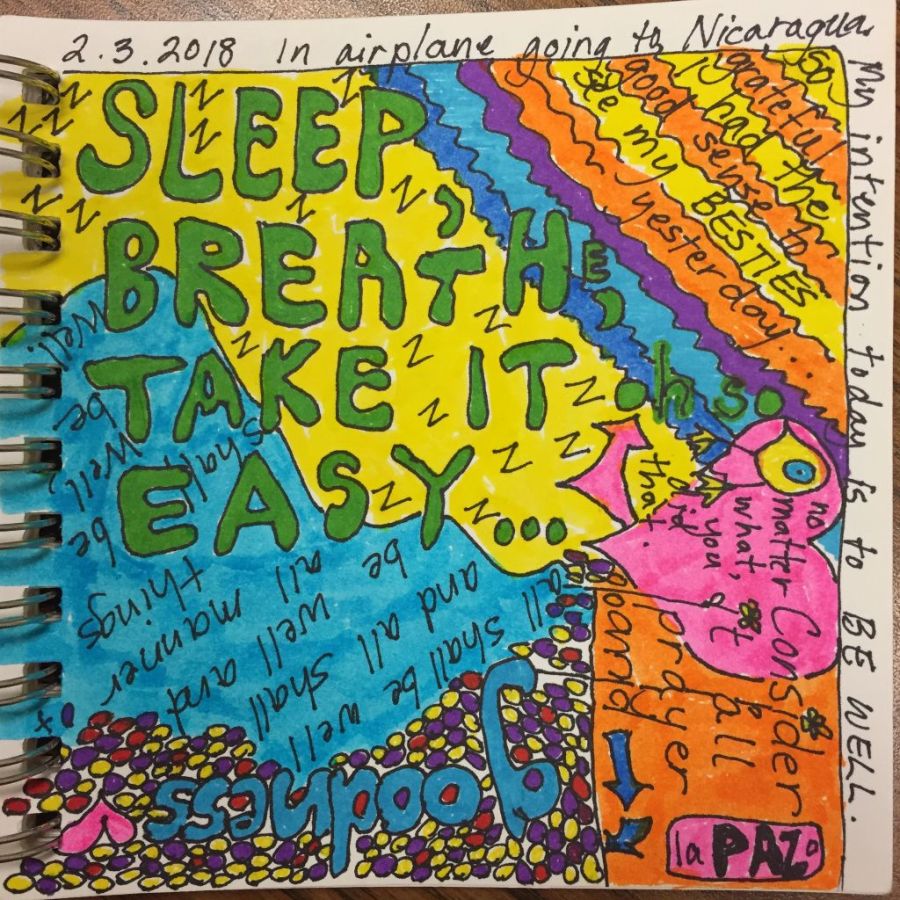
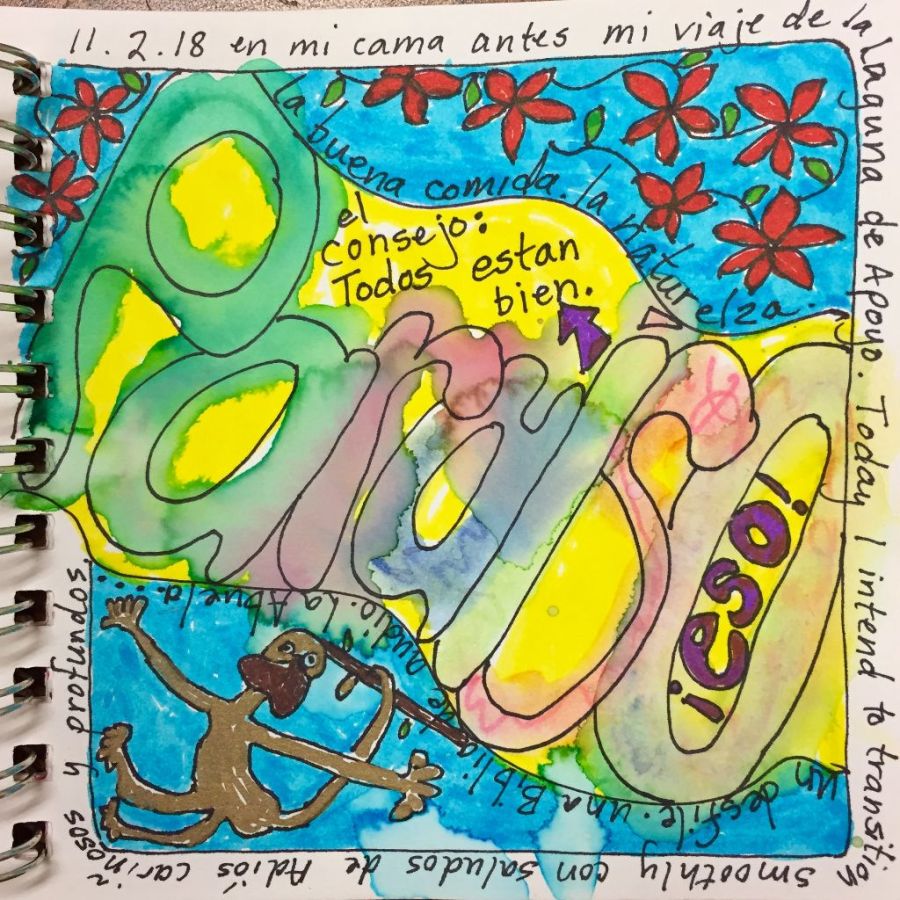
Once completed, I added my own art review to summarize the highlights of the letters. A bit of a hodge-podge yes, but my intention was clear. My assignments were complete, given this very page of reflection about how I know and experience God and how God reaches me. I know God through the creativity of imagination and through behaviors. Especially during that hour on the Pan American highway, my eyes opened and the scales of any concern fell away.

In the words of Meister Eckhart, “The eye through which I see God is the same eye through which God sees me; my eye and God’s eye are one eye, one seeing, one knowing, one love.”

Microaggression: Not My Intent

circle-photo

I’ve done it again. And I hate to admit it. But since my intent is to at least do no harm, even do my part to improve things—to live/model/teach a better way and finally to connect with and empower others to do the same—I must tell this uncomfortable story.

As part of the equity team at my elementary school, I was invited to hear Zaretta Hammond speak about culturally responsive education and the brain. The event had been slated for the first anniversary of Trump’s inauguration and scheduled long before the women’s marches became public. So while others were walking in downtown Seattle on Saturday, my butt was seated in Renton. My mind was actively involved in a relevant and related activity—a workshop about taking fairness into our schools through excellent teaching. I was fortunate to be present with several from my school and almost fifty others from my district.

Plus lunch was provided. Always a bonus.

As engaging as the material was, linked to the anti-institutional-racism work I am drawn to, my greatest learning started during lunch. Zaretta had encouraged us to visit with someone new over the meal.

I saw an open chair beside a younger-than-me and browner-than-me woman who appeared to be on her own. She encouraged me to join her and we began trading questions and comments and getting to know each other. She was friendly. Interesting too because while we are both educators we work in different roles and settings, me as a counselor in a public school and she as an administrator in an independent school.

I was curious.

Then I said it, not “Where are you froooom?”—God, I know better than that!—but, “Were you born in the U.S.?” Right away, I noticed that she, without skipping a beat, ignored my question. I wish I knew better! In this immigrant-phobic country we now live in, I had asked something that came close to questioning her status. None of my business. I teach people not to ask that, for God’s sake. Regardless of my intent to connect, satisfying my curiosity and anticipating appreciating more of her, she felt hurt, perhaps angered. I knew because she folded her arms across her body and while we talked more, I didn’t feel closer. We exchanged cards though, ever the professionals.

Thus during the afternoon session when we dug into characteristics of our dominant-white culture, I was able, from across the room, to acknowledge my microaggression in an email. I hoped she would forgive me.

Instead she, my newest instructor, replied and explained that what I had asked was a question she had heard frequently in various forms. She had decided long ago to be very intentional about who she told this part of her story. And it wasn’t me! (She actually didn’t say or write this exactly but I remembered her decision not to share because of her crossed arms.) Sitting alone at home as I read her email, I felt an ache in my gut. Here I was yet again, contributing to this insidious racism because I live in it, as we all do.

My colleague also sent this link, a column by Omid Safi complete with a YouTube illustration by Ken Tanaka. She encouraged me to share it. I highly recommend you watch it too.

The hardest part is recognizing that I am the kind of person who does this. I am a white woman in this white-dominant culture. Racism goes deep and is ubiquitous, sometimes subtle, sometimes obvious. And bless pat, I meet “perfect strangers” who, while it is exhausting, will be “professional” in the face of it. Then when I notice and ask forgiveness, albeit indirectly, will tell it like it is. She responded honestly for herself as an individual and also more broadly for people of color in general. Not only that but she offered me a clear way to tell others who are like me about her experience and that of others like her. As uncomfortable as the topic is, I am grateful for her brief, effective candor.

And I am sad and sometimes despondent, recognizing what a giant piece of work we have ahead of us. Finally I am taking on some of the burden. My friends who have black and brown skin do this every day. They don’t know where the next unconscious slight—a microaggression—is coming from. Lucky me, I get to rest when I want or need to. I can hide behind my pale face, knowing what I know, later to come out again and ask, “Sorry, did that hurt? Not my intent,” realizing my friend still hurts regardless of my conscious objective.

The least I can do is admit it. After all, I am a white person who dares to write about bridging. Yet here I am again. In this culture of ever-present white dominance and privilege, I too contribute.

I commit to noticing, then asking, then listening to stories and sharing mine. My intention is to speak with heart from my side of the street and learn to live a better way on our collective long road to healing.

That Holiday Letter

Snow

Dear Ones,

We enjoyed an unexpected and exquisitely gorgeous White Christmas here in Seattle. Consequently many of our plans changed and the resulting spontaneity has been marvelous.

For one thing, I had hoped to circulate my holiday greetings before Christmas Day. Actually lots of cards were attached to little gifts including, for a lucky few of you, raw Holy Honey (aka Cathedral Gold) thanks to apiarist Rob Reid. Other notes found their way to the mail slots of co-workers or the front stoops of neighbors. Then the cards started to get scarce so when the white stuff hit, any deadlines fell to the wayside. I realized I’ve been receiving more electronic messages this season anyway and it was time to follow suit. As much as I love receiving hard-copy paper mail, it was time to conserve.

And who cares if it’s after the 25th anyway? In the Episcopal version of the Christian tradition we recognize twelve days of the season and nothing’s over until the Wise Guys come.

Meaning that this message is not late after all.

Good News indeed! And don’t get nervous on me. No worries about politicizing or more religiosity—that which 2017 is so famous for—in this summary. After all, one of the best quotes I found during the year is James Finley’s:

“When we seek what is truest in our own tradition, we discover we are one with those who seek what is truest in their tradition.”

More and more this business about being connected or even One is becoming clear to me. So:

Witches

Photos in Prague, Fall 2017

Prague duo

Originally I thought simply sending these two photos would suffice to share enough of what we’ve been up to in 2017. Together they show we are having fun while we grow old together. I added the caption because I thought these four words and one number could tell you that I am semi-retired (yeehigh!) because I can now travel in the off-season. I wouldn’t need to include any further written explanation. Rob thought the words were a bit showy especially on their own. Ok, ok, maybe a few more words about the year are warranted.

The best way to know what I’m up to in general is to keep visiting my blog. I post once or twice a month. And if you dig around here, you’ll find stories about the others too. For example, “Bouquet with Harvoni” is primarily about Rob; “Meditating in Public” references Clarke; and “Black Cats” is about Carolina and her kitties.

Which reminds me, after lots of traveling both of our kids live in Seattle now AND are gainfully employed: Clarke’s in education and Carolina’s in service (one word descriptions – how’s that for showy?) We are delighted they are both creative—Clarke in music especially and Carolina in everything else especially food. You can see what they have to say for themselves instead of taking my word for it; just click on their names.

Mom, who will be 90 on St. Patrick’s Day, is well and lives nearby too. She published a book—Haiku Memories by Bernie Clarke—in 2017. It’s available on Amazon.

All this means that sometimes I have to pinch myself, wondering if this much Goodness could be real for me. I told a friend today that I feel favored…it just seemed like the right word to use in the moment instead of the other usual ones like grateful and blessed and cared for. I hope this is your experience sometimes as well.

In fact, I am sitting right here, right now, imagining that you too will have these pinching-yourself times—times of noticing–more and more frequently in 2018 and beyond.

Con mucho amor,

Penny

I Am Whole

Portrait

A couple of years ago, I stood in our kitchen surrounded by post-it notes stuck to the cabinets in front of me. Each note started with the title I had lived with for almost a year as I wrote my book: I Stand on the Bridge. Each post-it, 10 or 15 of them, also included a different subtitle. I had asked several people which subtitle they liked best and had made tick marks beside their preferences. My dear friend, Jeanne, had sent a new idea instead of voting for one of the few I’d emailed around. Her suggestion was Bridging Languages, Cultures and My Life. I was pissed that she had stepped outside of my ideas but I decided to post the new possibility with the others.

I remember the point of conversion in my mind and heart. I had called Kristin, my editor. We were, once again, discussing the title, this time with post-its surrounding me. By then, I was curious about the new possibility. Instead of the stiff firmness in I Stand on the Bridge, “bridging” was an active verb.

I asked, “What about this new one?”

“Penny, bridging is what you do,” Kristin replied.

I felt existential recognition in that moment, recognizing myself and being recognized by another. My legs were tingling and I turned from the place of compartments I had built for myself—a place where a solid bridge could connect two different characteristics or languages or countries or races or genders to the thinly-boundaried amalgam where everything connected.

See, when I was 25, my youngest sister got sick and remembered she had been raped many times at the camp where I spent my summers as a child. This is the tale that turned my pure foundation of family into a nightmare, after which I taught myself to compartmentalize. My parents denied any of their own culpability in Susan’s story. Likewise, I had no personal memories to corroborate it though, believe me, I did try digging for them. Susan chose not to accuse anyone directly but instead moved to Washington, estranged herself from my parents and began to heal. In the interest of maintaining a relationship with her and also with my parents, I erected and plastered a wall between those relationships. I could believe, love and be with Susan. And I could believe, love and be with my parents. Physically and in my mind too, the two were absolutely separate. Crazy-making, I know, but the effect was I could survive, even thrive.

Over the years the wall between Susan and my parents has crumbled first with a facilitated family meeting about ten years into the estrangement. But my compartmentalizing strategy worked so well that I applied it in other parts of my life.  For years I maintained stiff compartments for work and home. My deep faith and the words that describe it were for home use only. So was fun and love and hugging. This strategy did help me separate church and state as I labored for the least advantaged children and families in hospitals and public schools. I maintain an abiding appreciation for using secular descriptions at work where I respect differing philosophies.

On that book-title night though, I saw many of my life experiences line up as preparation for this moment. I turned away from compartments and turned toward wholeness, across my life.

Now, most of the time I live here, in this place of I-Am-Whole—recognized, loved, free to go forward and love without separation and unconditionally. No qualifications and no holding back, anywhere, any more, at all.


Grateful Old Me

Privilege

November is my birthday month. This year I will officially become a senior at age 62. No benefits like Medicare are available yet but I can draw Social Security if I choose. Every business that offers a senior discount does so for 62-year-olds. Even though I won’t be Paul McCartney’s proverbial 64 yet, 62 seems significant. For one thing, 62 was the age Rob retired.

And, Lord God, I am blessed in many ways. By most anyone’s standards I am healthy, even well enough to pay the lowest premium for long-term care insurance. I’m wealthy too–in the top 1% worldwide with regards to material resources. Plus I have unearned privileges–born white in the U.S. where I Iearned to speak English early and easily. I have meaningful work and can afford to do it part-time. We enjoy a comfortable home, even own two houses. I am part of an intergenerational faith community, two of them actually. And I can travel around the world, crossing borders and then coming home again with relative ease. I have a diverse group of friends and wonderful neighbors. This year even my elderly mother is well and nearby. So are our children.

Sometimes I feel decadent and I am embarrassed by all this wealth and privilege. Why me? Especially given so much poverty, injustice and suffering everywhere. I understand the prayer, “Shield the joyous.”

I simply ask that I live in thanksgiving, learning ways to share goodness. I want to be a conduit, one that continues creating then giving away love in all forms. I want to flex enough to receive it back again too in a flurry of hearts and giant unending circles of reciprocity.