Blog

That Holiday Letter

Snow

Dear Ones,

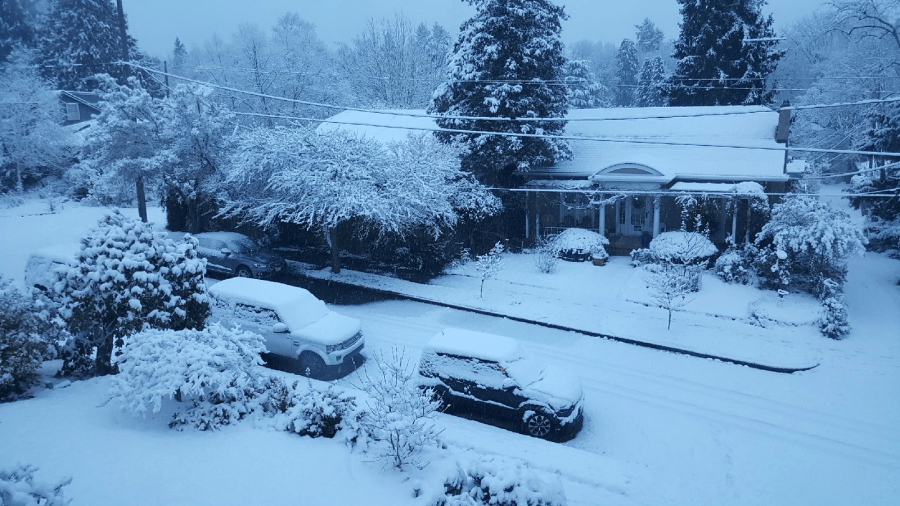
We enjoyed an unexpected and exquisitely gorgeous White Christmas here in Seattle. Consequently many of our plans changed and the resulting spontaneity has been marvelous.

For one thing, I had hoped to circulate my holiday greetings before Christmas Day. Actually lots of cards were attached to little gifts including, for a lucky few of you, raw Holy Honey (aka Cathedral Gold) thanks to apiarist Rob Reid. Other notes found their way to the mail slots of co-workers or the front stoops of neighbors. Then the cards started to get scarce so when the white stuff hit, any deadlines fell to the wayside. I realized I’ve been receiving more electronic messages this season anyway and it was time to follow suit. As much as I love receiving hard-copy paper mail, it was time to conserve.

And who cares if it’s after the 25th anyway? In the Episcopal version of the Christian tradition we recognize twelve days of the season and nothing’s over until the Wise Guys come.

Meaning that this message is not late after all.

Good News indeed! And don’t get nervous on me. No worries about politicizing or more religiosity—that which 2017 is so famous for—in this summary. After all, one of the best quotes I found during the year is James Finley’s:

“When we seek what is truest in our own tradition, we discover we are one with those who seek what is truest in their tradition.”

More and more this business about being connected or even One is becoming clear to me. So:
Witches

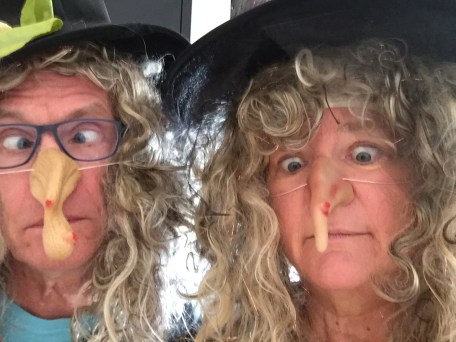
Photos in Prague, Fall 2017

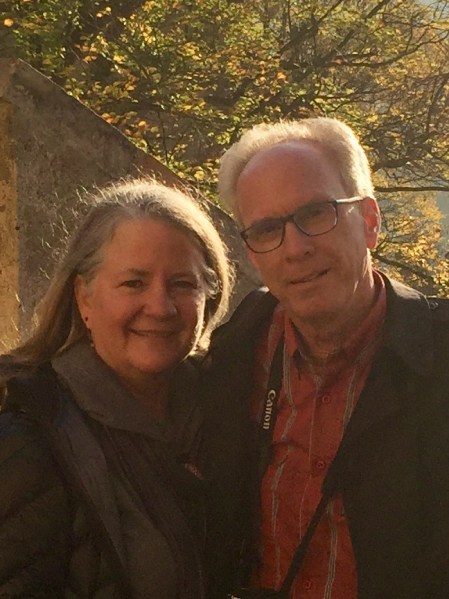
Prague duo

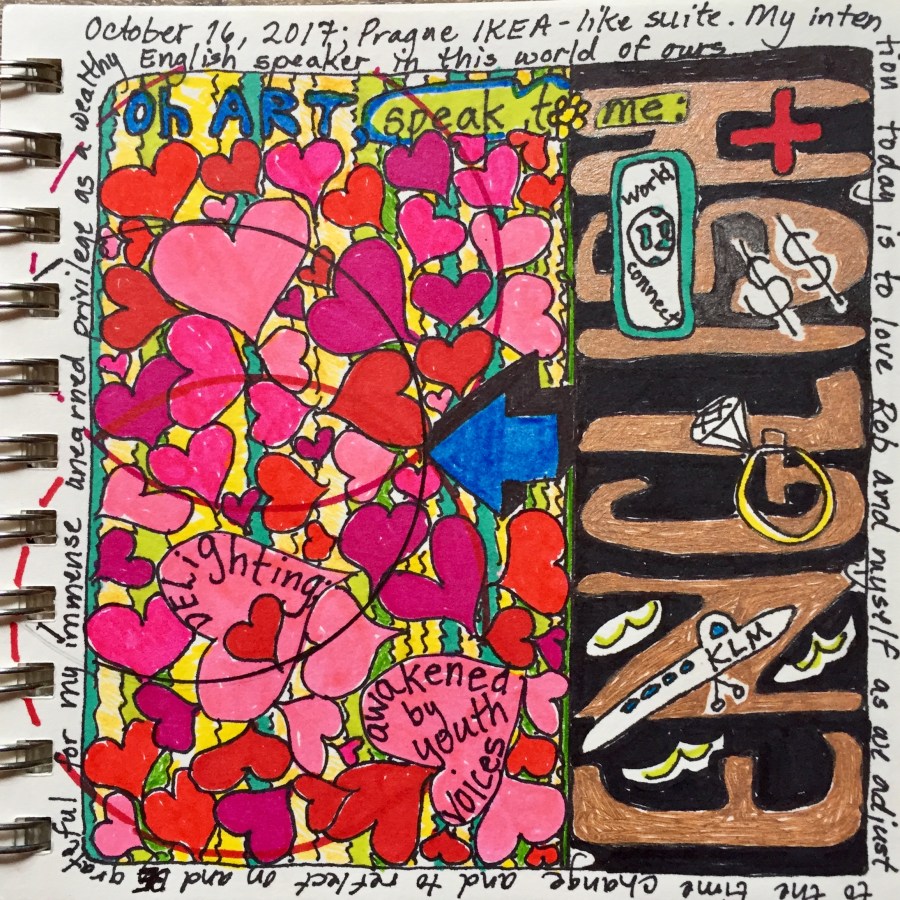
Originally I thought simply sending these two photos would suffice to share enough of what we’ve been up to in 2017. Together they show we are having fun while we grow old together. I added the caption because I thought these four words and one number could tell you that I am semi-retired (yeehigh!) because I can now travel in the off-season. I wouldn’t need to include any further written explanation. Rob thought the words were a bit showy especially on their own. Ok, ok, maybe a few more words about the year are warranted.

The best way to know what I’m up to in general is to keep visiting my blog. I post once or twice a month. And if you dig around here, you’ll find stories about the others too. For example, “Bouquet with Harvoni” is primarily about Rob; “Meditating in Public” references Clarke; and “Black Cats” is about Carolina and her kitties.

Which reminds me, after lots of traveling both of our kids live in Seattle now AND are gainfully employed: Clarke’s in education and Carolina’s in service (one word descriptions – how’s that for showy?) We are delighted they are both creative—Clarke in music especially and Carolina in everything else especially food. You can see what they have to say for themselves instead of taking my word for it; just click on their names.

Mom, who will be 90 on St. Patrick’s Day, is well and lives nearby too. She published a book—Haiku Memories by Bernie Clarke—in 2017. It’s available on Amazon.

All this means that sometimes I have to pinch myself, wondering if this much Goodness could be real for me. I told a friend today that I feel favored…it just seemed like the right word to use in the moment instead of the other usual ones like grateful and blessed and cared for. I hope this is your experience sometimes as well.

In fact, I am sitting right here, right now, imagining that you too will have these pinching-yourself times—times of noticing–more and more frequently in 2018 and beyond.

Con mucho amor,

Penny
I Am Whole

Portrait

A couple of years ago, I stood in our kitchen surrounded by post-it notes stuck to the cabinets in front of me. Each note started with the title I had lived with for almost a year as I wrote my book: I Stand on the Bridge. Each post-it, 10 or 15 of them, also included a different subtitle. I had asked several people which subtitle they liked best and had made tick marks beside their preferences. My dear friend, Jeanne, had sent a new idea instead of voting for one of the few I’d emailed around. Her suggestion was Bridging Languages, Cultures and My Life. I was pissed that she had stepped outside of my ideas but I decided to post the new possibility with the others.

I remember the point of conversion in my mind and heart. I had called Kristin, my editor. We were, once again, discussing the title, this time with post-its surrounding me. By then, I was curious about the new possibility. Instead of the stiff firmness in I Stand on the Bridge, “bridging” was an active verb.

I asked, “What about this new one?”

“Penny, bridging is what you do,” Kristin replied.

I felt existential recognition in that moment, recognizing myself and being recognized by another. My legs were tingling and I turned from the place of compartments I had built for myself—a place where a solid bridge could connect two different characteristics or languages or countries or races or genders to the thinly-boundaried amalgam where everything connected.

See, when I was 25, my youngest sister got sick and remembered she had been raped many times at the camp where I spent my summers as a child. This is the tale that turned my pure foundation of family into a nightmare, after which I taught myself to compartmentalize. My parents denied any of their own culpability in Susan’s story. Likewise, I had no personal memories to corroborate it though, believe me, I did try digging for them. Susan chose not to accuse anyone directly but instead moved to Washington, estranged herself from my parents and began to heal. In the interest of maintaining a relationship with her and also with my parents, I erected and plastered a wall between those relationships. I could believe, love and be with Susan. And I could believe, love and be with my parents. Physically and in my mind too, the two were absolutely separate. Crazy-making, I know, but the effect was I could survive, even thrive.

Over the years the wall between Susan and my parents has crumbled first with a facilitated family meeting about ten years into the estrangement. But my compartmentalizing strategy worked so well that I applied it in other parts of my life.  For years I maintained stiff compartments for work and home. My deep faith and the words that describe it were for home use only. So was fun and love and hugging. This strategy did help me separate church and state as I labored for the least advantaged children and families in hospitals and public schools. I maintain an abiding appreciation for using secular descriptions at work where I respect differing philosophies.

On that book-title night though, I saw many of my life experiences line up as preparation for this moment. I turned away from compartments and turned toward wholeness, across my life.

Now, most of the time I live here, in this place of I-Am-Whole—recognized, loved, free to go forward and love without separation and unconditionally. No qualifications and no holding back, anywhere, any more, at all.


Grateful Old Me

Privilege

November is my birthday month. This year I will officially become a senior at age 62. No benefits like Medicare are available yet but I can draw Social Security if I choose. Every business that offers a senior discount does so for 62-year-olds. Even though I won’t be Paul McCartney’s proverbial 64 yet, 62 seems significant. For one thing, 62 was the age Rob retired.

And, Lord God, I am blessed in many ways. By most anyone’s standards I am healthy, even well enough to pay the lowest premium for long-term care insurance. I’m wealthy too–in the top 1% worldwide with regards to material resources. Plus I have unearned privileges–born white in the U.S. where I Iearned to speak English early and easily. I have meaningful work and can afford to do it part-time. We enjoy a comfortable home, even own two houses. I am part of an intergenerational faith community, two of them actually. And I can travel around the world, crossing borders and then coming home again with relative ease. I have a diverse group of friends and wonderful neighbors. This year even my elderly mother is well and nearby. So are our children.

Sometimes I feel decadent and I am embarrassed by all this wealth and privilege. Why me? Especially given so much poverty, injustice and suffering everywhere. I understand the prayer, “Shield the joyous.”

I simply ask that I live in thanksgiving, learning ways to share goodness. I want to be a conduit, one that continues creating then giving away love in all forms. I want to flex enough to receive it back again too in a flurry of hearts and giant unending circles of reciprocity.


Intercultural Continuum

Ginter Park

Recently I was asked why I’d enrolled yet again at Casa Latina to study Spanish. Isn’t the fact that we’re neighbors with native Spanish speakers enough of a reason? I do wonder sometimes though. Why am I so committed to this particular dream when it is immensely difficult to really make any progress at age 61 stateside?

A few months ago at the Diocesan College for Congregational Development, I learned of Bennett’s Intercultural Development Continuum. I now realize that much earlier in my life during my impressionable teenage years I appreciated and adapted to a culture different from my own. Moving through the continuum from Denial/Ignorance of differences to Polarization/Fear of differences to Minimization/Masking of differences to Acceptance, Adaptation and Integration took about ten years. Eventually I thrived and as a result throughout my lifetime I’ve had more options as I have associated with a vast variety of people. Now I feel drawn to recreate this movement on the continuum again along with the resulting vibrancy. This time the shift includes learning language as I seek deeper relationships. But first, let me try to explain the origins of my intercultural experiences.

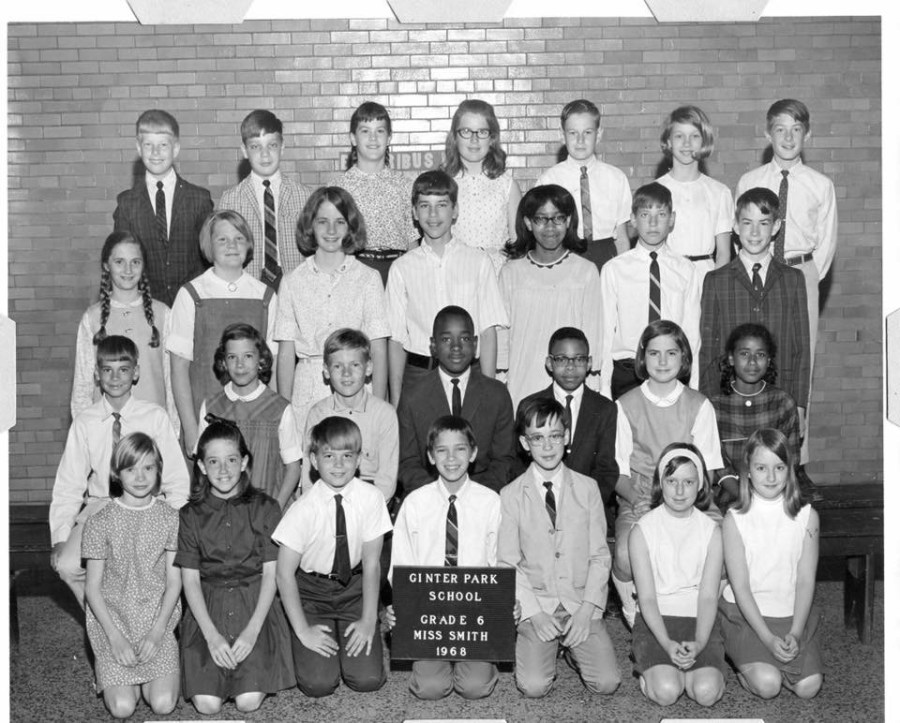
I credit my Dad for the first time my life circumstances plunged from light to dark. As my public elementary school principal and in his own way, a proponent of social justice, he and my mother didn’t consider white flight an option in the mid-60’s when desegregation was the law. Instead I became part of a two percent white minority at school in the South as a 12-year-old. Race had been a phenomenon in my consciousness before then. Besides conversations around the dinner table about which one of us girls would have the school’s first Black teachers, consider the photo of my sixth grade class. It includes Heywood, Jan, Sheila and Lee when they were in the minority as Black students and making history the year before I did.

I suspect they may have already talked about their experiences though. I never have.

Facing back into the past, let’s drop in on my first day at Chandler Junior High in Richmond, Virginia. There I stood, scared out-of-my-mind and frozen on the school’s front stone steps. I had been bussed across town and was surrounded by hundreds of Black kids who also waited for the first bell to ring. I could not imagine walking through this unknown jungle and finishing unscathed. Two years as one of ten whites amongst 500 students meant I heard the slur, “White Girl!” directed at me in every tone of voice. I was also briefly groped when passing in the halls between classes and, if I needed to use the bathroom including during the early months of my period, I took my life in my hands. I have very few positive memories of those bleak years, at least at school.

High school was infinitely more navigable for me. For one thing, the white population increased to about ten percent of the total student body. Tracks existed, meaning the wealthier students—us middle-class white kids as well as the Black students whose parents were more educated—were registered into advanced sections of classes. And my high school was closer to home, near my elementary school. Subconsciously I knew I could walk home if I needed to. This helped.

As I look back now I realize that literally the church saved me.

From age six through most of my teen years my family of five spent summers at Camp Hanover, a Presbyterian overnight program for children where my folks served as nurse and assistant director. Summers at camp were blissful for me. Everyone was like me, for one thing, so race was a non-issue. I was untethered (even though I was the tetherball champion for a while), not connected to a counselor because my parents lived on-site. We were outdoors—swimming all afternoon, singing, canoeing, mud-sliding, churning and later slurping homemade ice cream, enjoying field games and craft-making. We checked in three times per day at meals and attended Vespers daily. On a deep elemental level camp, not school, was my “normal” experience throughout my teen years (as if anything could be normal during adolescence). I felt safe where there were fun ways to challenge my body physically as well as learn to pray out-of-doors regularly in community.

When we headed home at the end of the summer, I knew we would continue to tap into church as a family on Sundays. We lived on the north side of Richmond dubbed “the Presbyterian Ghetto” because it included Union Theological Seminary. The few white families who stayed in the public schools during desegregation were those whose fathers studied there.  The associated school of Christian education, hosted a rich folk-dance program for teenagers. Clogging, polkas and much laughing ensued at weekly dances. Besides being active in the youth group at our church, my early camp/church memories culminated the summer after high school with a mission trip to Mexico.

Over those six years of junior high and high school I gradually made more and more friends, whites and Blacks. Then after my freshman year in college I came back for my last summer in Richmond and chose to lifeguard across town near Chandler at an all-Black public swimming pool. I was outdoors and physically-engaged, smelling of coconut sun screen, learning to play Bid Whist in the guard shack between shifts, and guarding young lives with a fun set of peers. I hung out with them after hours too especially with a man named Cliff, smoking weed, dancing at all-Black clubs, enjoying acceptance into a culture that was different from mine. When I returned to university life I included African American history in my studies, finding the academic version interesting too.

I now recognize these touches with Black race and culture stretching over a decade formed a process toward mutual appreciation and acceptance. Given the easy comfortable breaks that home and church provided, my confidence in myself including my ability to connect across differences was fascinating and felt like Glory for lack of a better word.

And when you touch Glory once, of course you want to touch it again and again and again. I am fortunate to now find myself at St. Mark’s, continuing to gather food for the journey as I have for 30 years. I also worship regularly at Our Lady of Guadalupe Episcopal Church where the bilingual services and deepening friendships encourage me vocationally. Yes, improving my Spanish will lead to mutual acceptance and integration on the intercultural continuum this time with Hispanic folks. In my heart of faith I also know the language of Love is and always will be enough to carry us all.


Haiku’s Hammering in Me

St M's visqueen.png

All over, building

at our church and our cabin

and across the street.


It’s like long ago,

everything was in flux

when we were wardens.


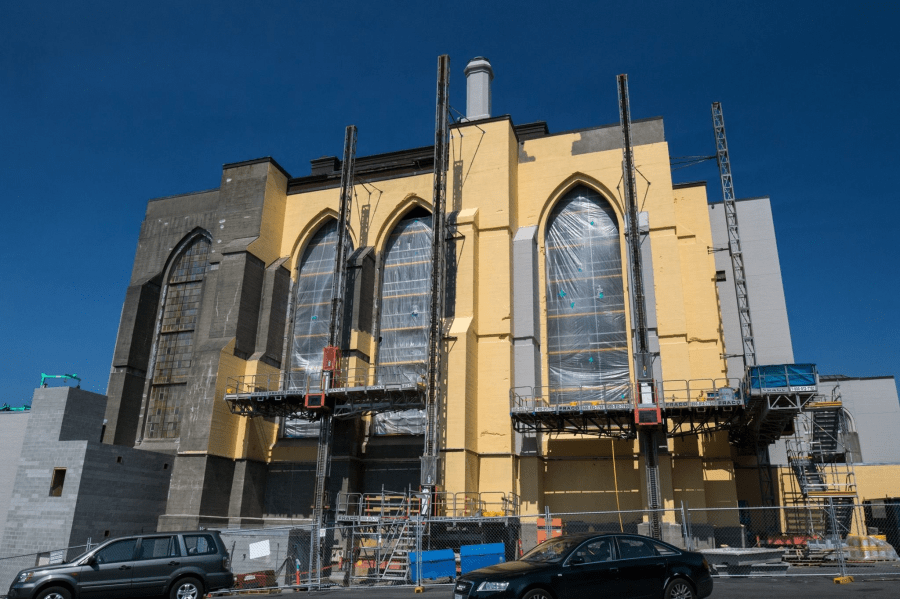
Visqueen in our house

and in the cathedral’s nave,

hung on the same day.


Our bright new kitchen,

a new wall and rose window.

Wonderful results!


Twenty years later

reconstruction’s underway.

Promising projects.


But those beloved ones

with ailing hearts and bodies

also face repairs.


Will they shine again?

Clearly I would choose them first

over the buildings.