Haiku’s Hammering in Me

St M's visqueen.png

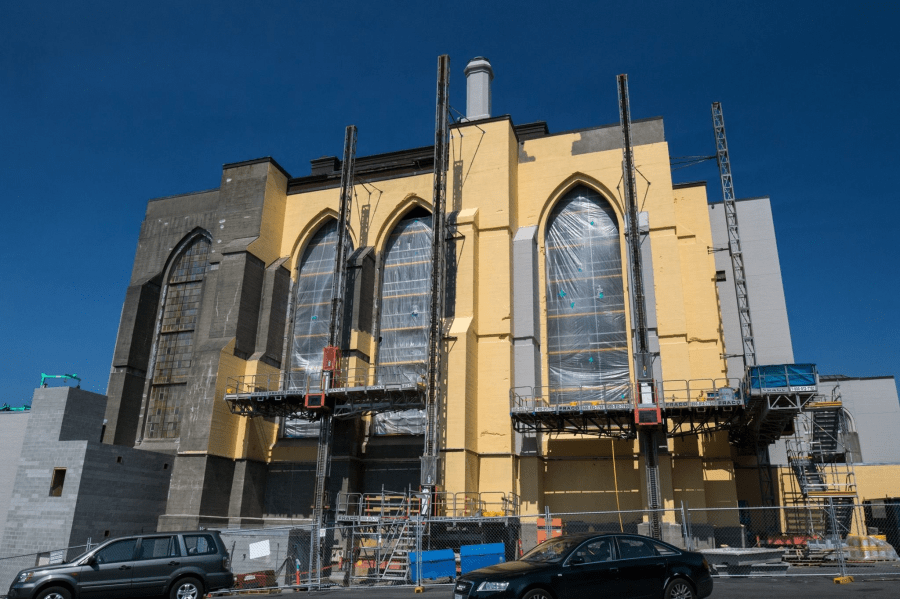
All over, building

at our church and our cabin

and across the street.


It’s like long ago,

everything was in flux

when we were wardens.


Visqueen in our house

and in the cathedral’s nave,

hung on the same day.


Our bright new kitchen,

a new wall and rose window.

Wonderful results!


Twenty years later

reconstruction’s underway.

Promising projects.


But those beloved ones

with ailing hearts and bodies

also face repairs.


Will they shine again?

Clearly I would choose them first

over the buildings.

Settling?

Setlle art

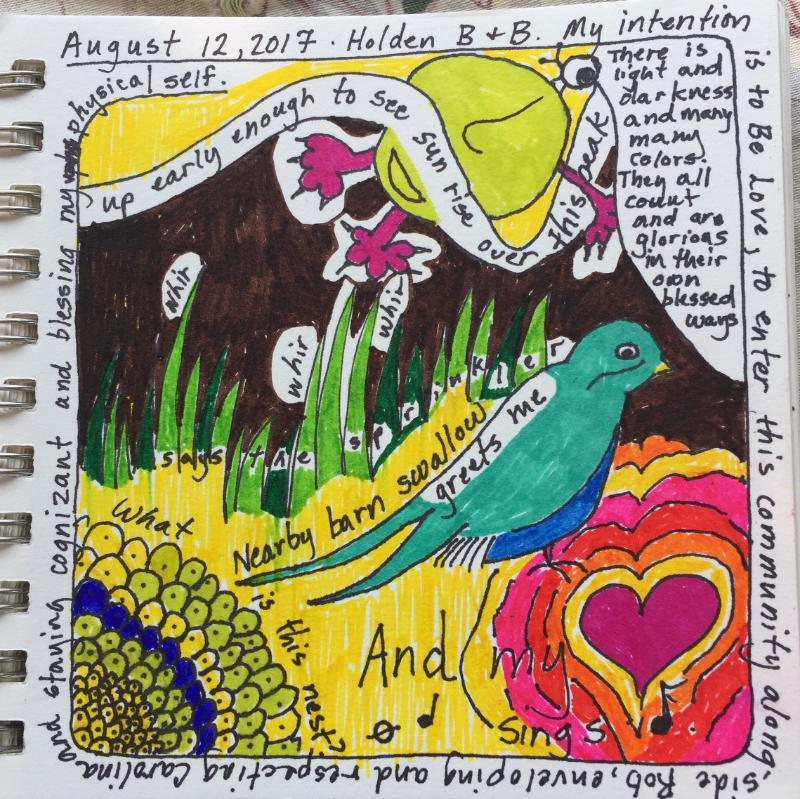
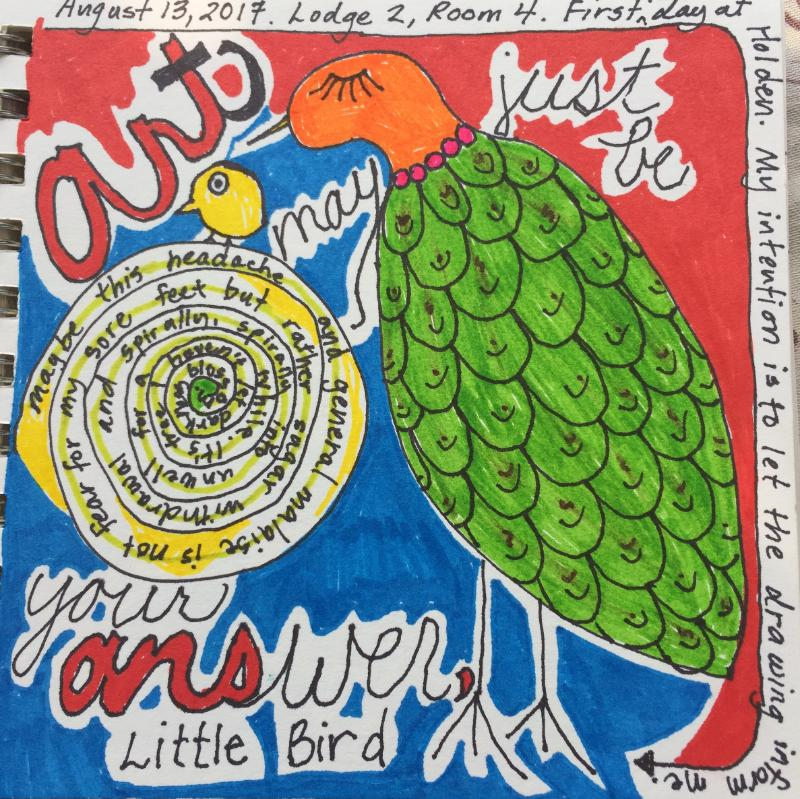
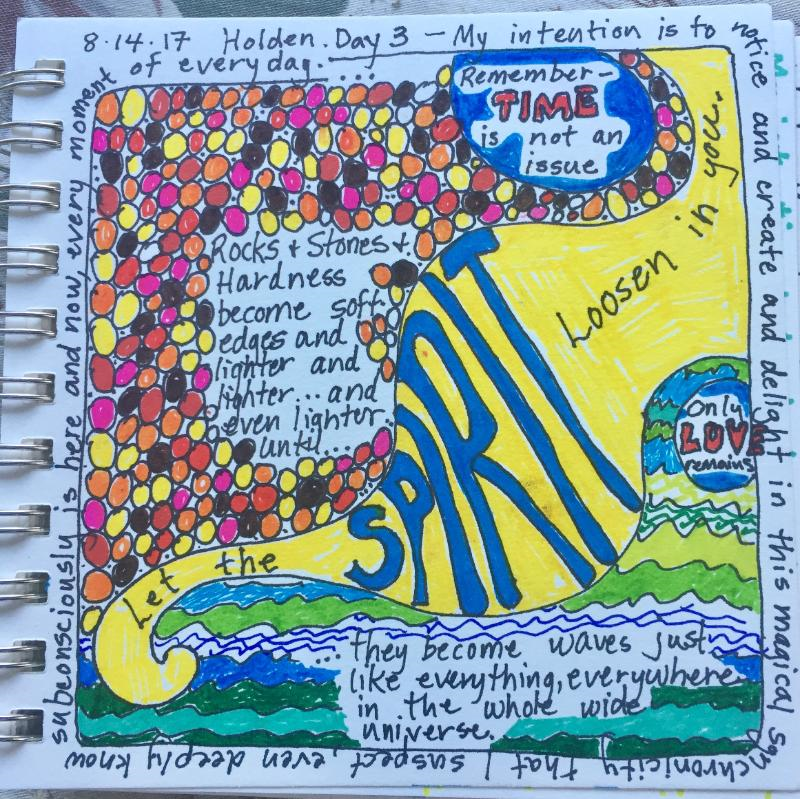
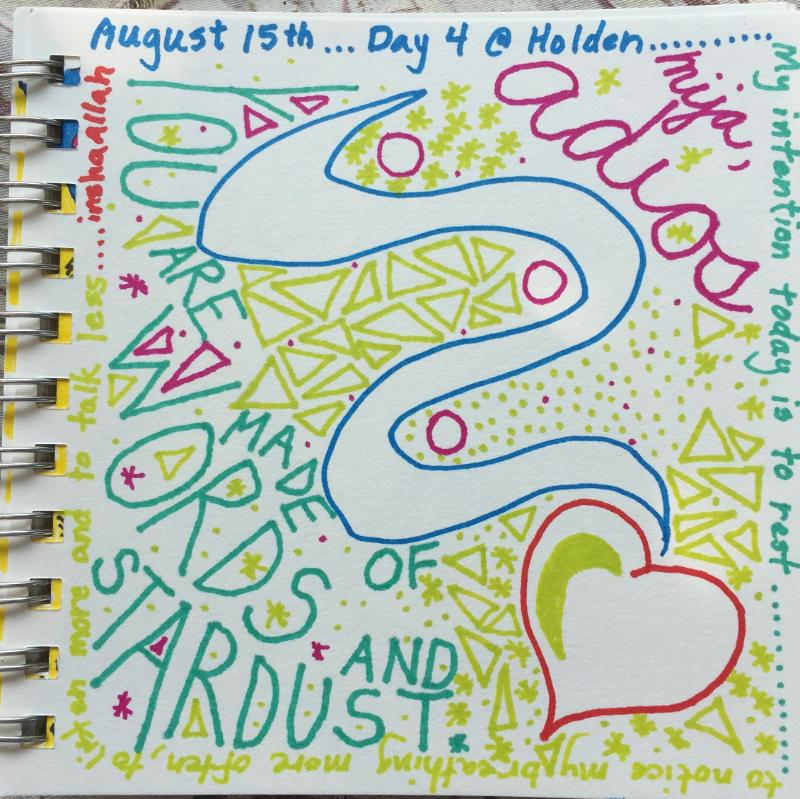
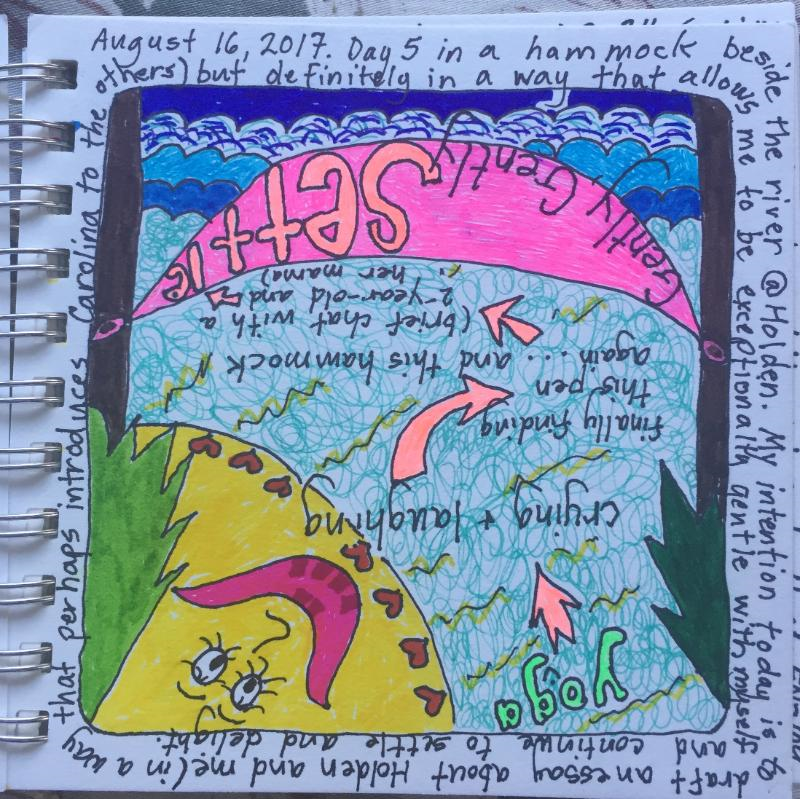
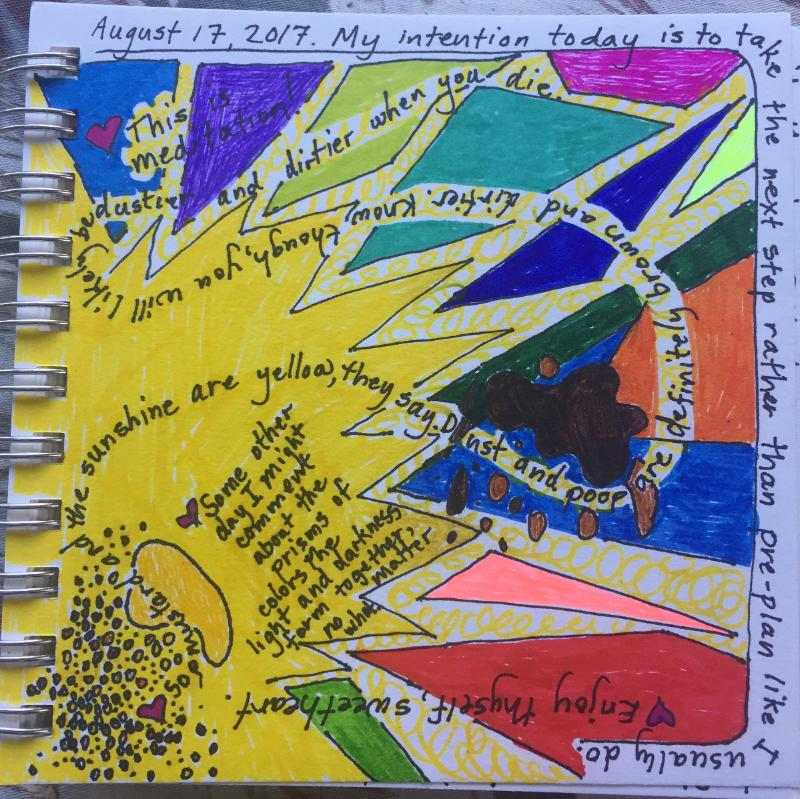
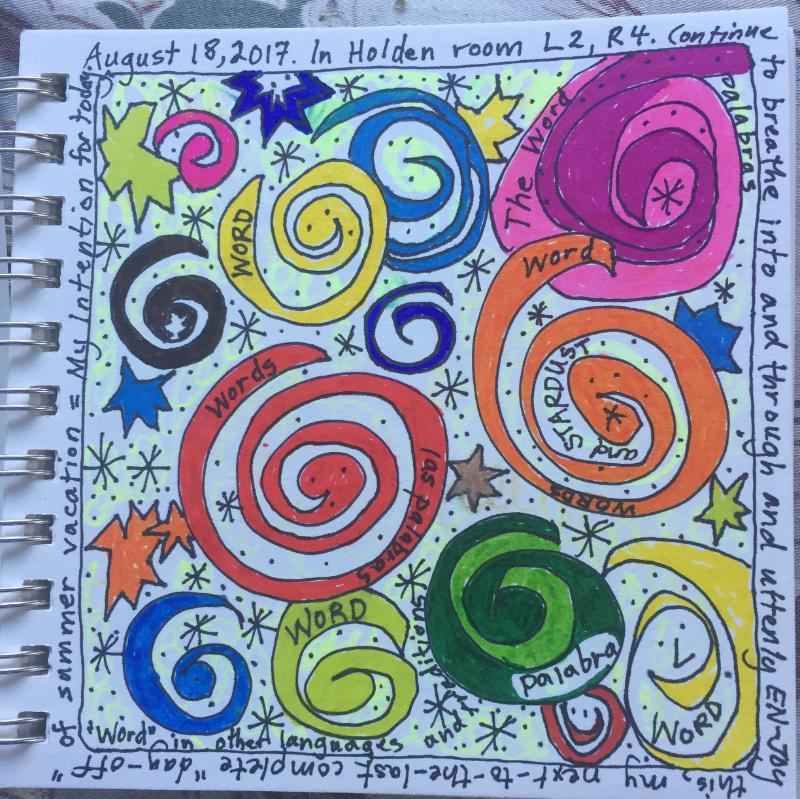
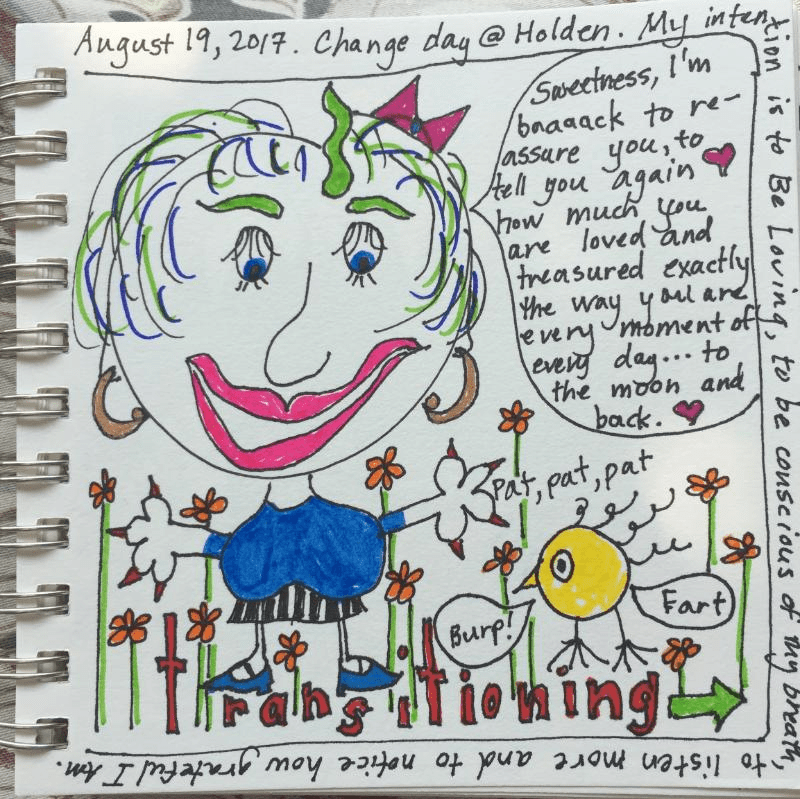
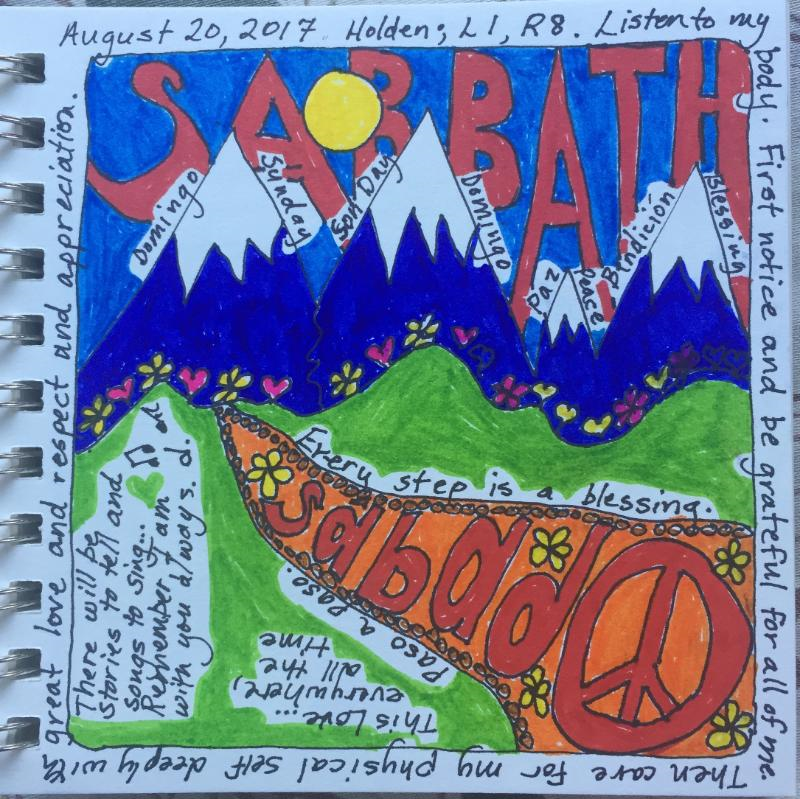
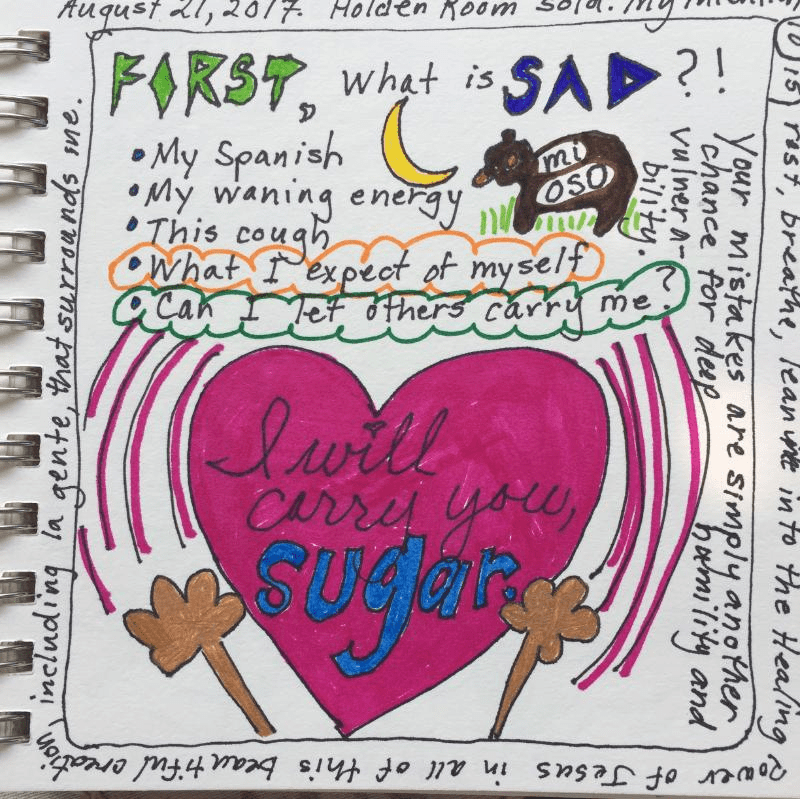
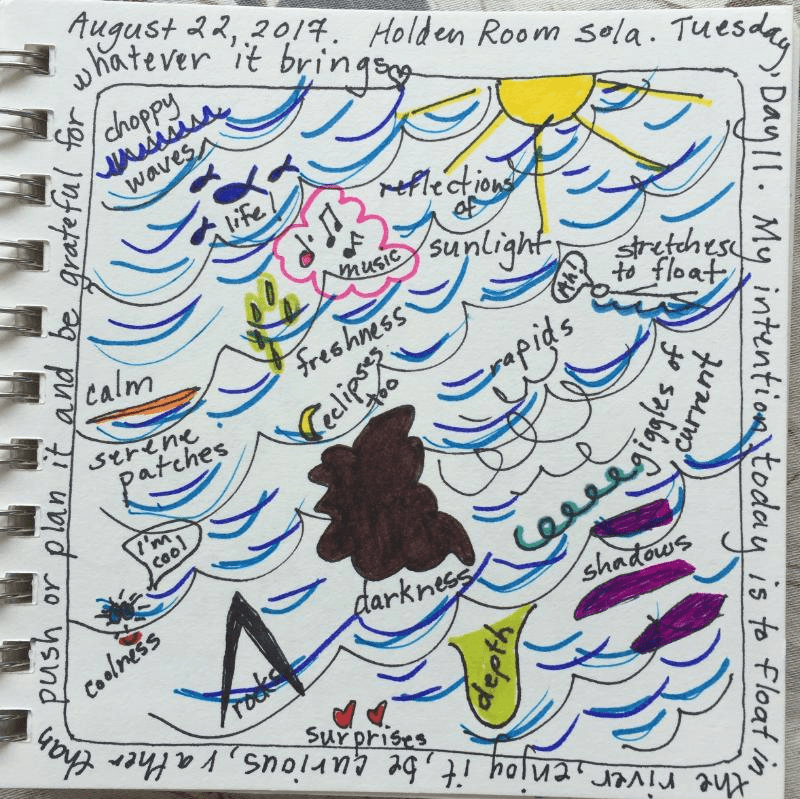
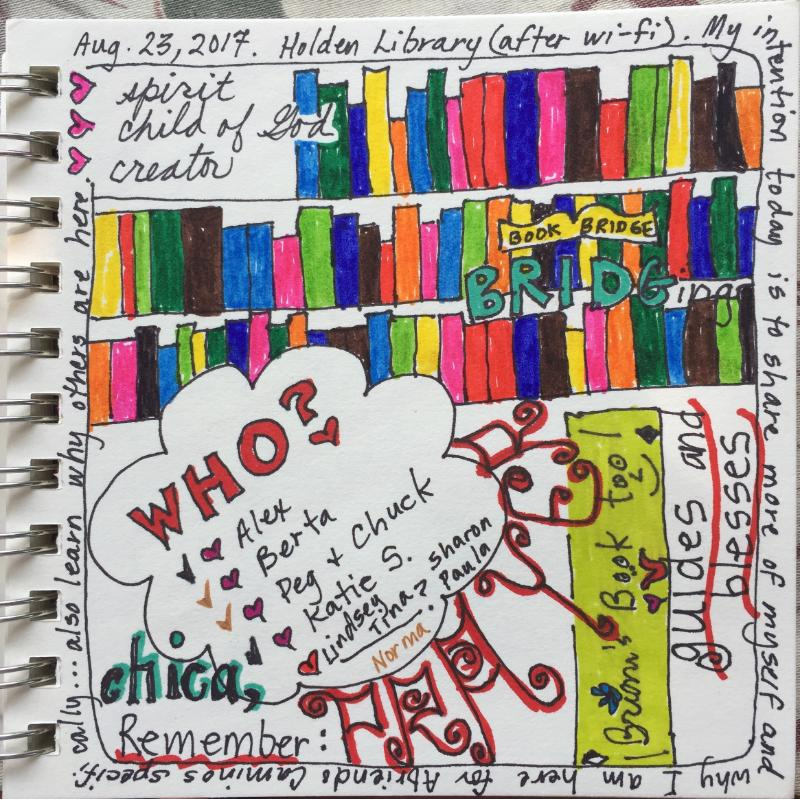
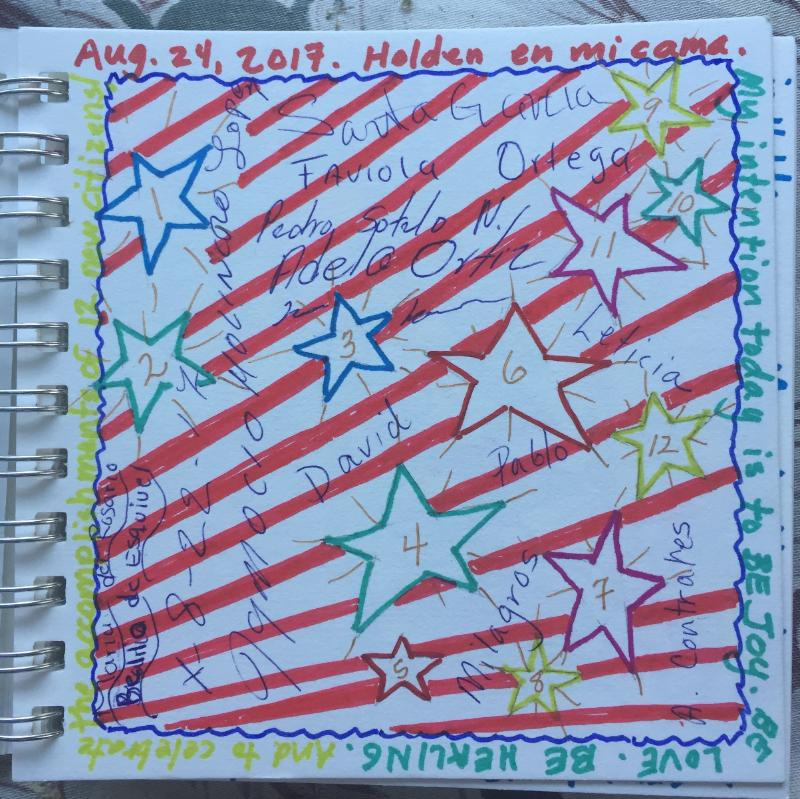
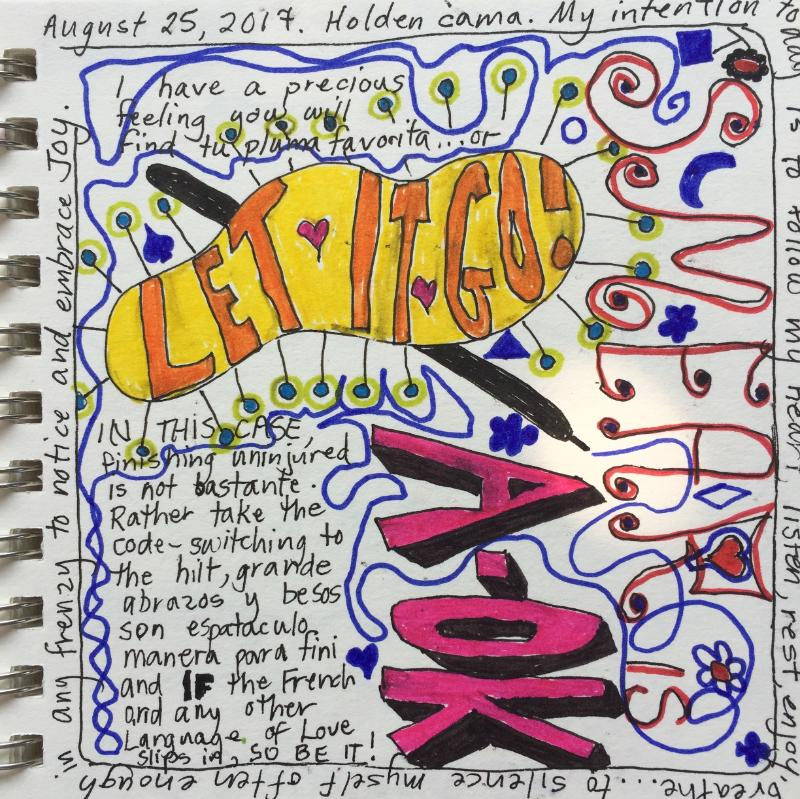
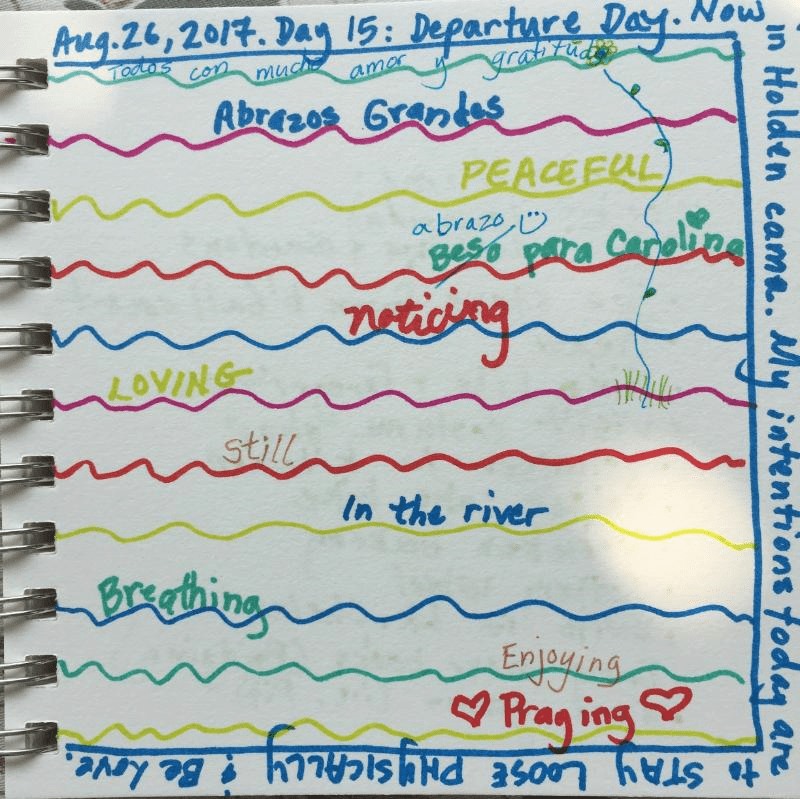
While at remote Holden Village for two weeks, I tried journaling in a new way. Every day, usually early, I settled enough to articulate an intention and then drew whatever came to mind. Some days I chose to finish the day’s piece in one sitting; others I added splashes of color throughout the day.

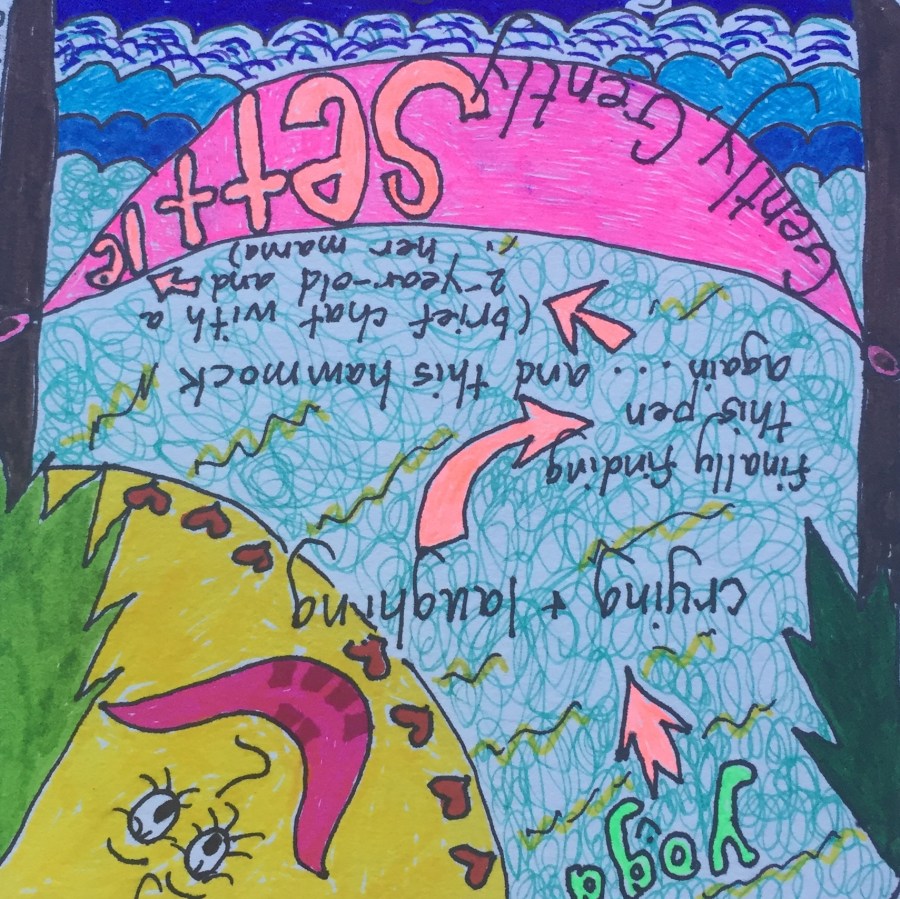
One morning it was especially challenging to still myself until I found a hammock beside the river. I began to sink in. Laughing at myself – the best kind – ensued when I realized “gently, gently settling” was upside-down in my little spiral notebook.

I am here again, a bit frenetic and upside-down as I anticipate tomorrow. That’s when we school psychologists will gather for our annual retreat and start yet another school year. This last summer day of no firm commitments will sadly come to an end.

Sinking into the art of my heart calms me. As summer ends and fall franticness threatens, I remind myself there were 15 sweet days far away in the mountains:

DAY 1

Aug 12.png

DAY 2

Aug 13

DAY 3

Aug 14

DAY 4

Aug 15

DAY 5

Aug 16.png

DAY 6

Aug 17

DAY 7

Aug 18

DAY 8

Aug 19

DAY 9

Aug 20

 DAY 10

Aug 21

DAY 11

Aug 22

DAY 12

  • Aug 23.png

DAY 13

Aug 24

DAY 14

Aug 25.png

DAY 15

Aug 26.png 


Meditating in Public

China

It is out of character for me to arrive 35 minutes early for an appointment. But I was there this morning with lots of time to spare having misread my calendar. Oddly I was only surprised rather than frustrated with myself. After all I knew I’d brought the paper along as well as my phone. I definitely know how to entertain myself and I could count on Starbucks to welcome me. Still I was not interested in yet another journalist’s version of Orange 45 and Putin meeting for the first time in Germany. The prospect of front page photos was just not drawing me.

Instead the solitary chairs outside the salon looked inviting. I had recently promised myself to meditate for 20 to 30 minutes every day during my summer break. Could I practice here? Now? I had the time. But the nerve? Was this too woo-woo?

I remember when I began reserving some of my longstanding alone time in the morning for nothing more than sitting and closing my eyes. Later it occurred to me that perhaps I could invite myself to sit quietly in this way at work, in my cubicle. At first I attached a sign to the back of my chair and positioned it to inform any visitor who came looking for me, “Take 5. Please come back in 5 minutes.” Then I followed mindfulschools.org suggestions to practice mindfulness first for five minutes each day of the week, increasing to 10 minutes the next week, then 15. After six weeks, I was meditating 30 minutes in my cube with all the activity of the school district office continuing around me. For these longer sits, I waited until the end of the workday to practice. Interruptions (and the ensuing disappointment) were less likely late in the day and the drive home seemed more pleasant after the peaceful segue.

Cube meditation had an overall relaxing effect on me at work. I found myself creating more and more calm rather than my habit of hurried, frenetic reactions. I suspected taking time out in the middle of the exciting and frenzied marketplace might open a new sense of balance for me too. At any rate the very idea of the experiment delighted me. So I found a quieter spot, set my timer for 25 minutes and began to settle.

This time in public I was more dependent on my strategies: counting my breaths, breathing in-and-out while whispering in my mind, “Yah-weh, Yah-weh,” scanning my body and then noticing sounds, especially voices and a variety of accents.

Afterwards, business completed, I strolled home through the sunlit ravine, noticing more than usual. I stopped to speak with an Asian couple who were about my age. They didn’t speak much English so we pulled out our phones to point to photos and rely on Google translator. “My son in China now,” I ventured. They nodded as if they understood. Their son is studying “p h d” at the nearby university. I spoke to them initially because I thought they were travelers and might be speaking Chinese to each other. I wanted to welcome them. I might not have stopped them if I hadn’t just meditated for 25 minutes in the middle of a shopping center.

This special connection of noticing and welcoming seems to be a direct result of practicing mindfulness here and now, even in a busy public environment. I imagine I’ll continue to carve out time for meditation when I’m alone. And I will not rule out the possibility of practicing anytime anywhere. The resulting options and benefits are too enticing to resist.


Sharing Our Stories

Stories

Recently I finished novels about people whose circumstances are different from mine—The Turner House by Angela Flournoy and Half of a Yellow Sun by Chimamanda Ngozi Adichie. I became attached to the characters and marveled at how similar we are regardless. I was reminded of a Sunday morning at the cathedral’s 9 AM service when I looked around, knowing say, half of those gathered and thinking about their stories—tales of joy, misfortune, excitement, happiness, piercing grief and sadness. I was overcome with warmth and an outpouring of love and appreciation for these, my dear friends. Next I felt a subtle mind shift when I realized that the other half of these folks, the ones I didn’t know personally, had similar stories. For a moment—a precious moment indeed—I was washed in this deep sense of loving kindness for them too.

This year as I have extended my story-telling sessions about bridging across race and ethnicity from groups at church to my colleagues at work, I have witnessed a similar shift. My heart has expanded with sweet fondness for them too. I find that what connects us as human family is infinitely more important than any differences that threaten to drive us apart.

Story-telling at church and work started blending a couple years ago when we school psychologists along with district administrators were required to participate in one of several two-day workshops called “Undoing Institutional Racism”. In a large circle we reviewed the history of the construct of race in our country. After a series of activities, we collectively defined racism this way: “Race Prejudice + Power = Racism.” At the end of Day One together, I recognized that since this definition made sense to me I could agree with the facilitators, “Only whites (and all whites) are racist.” What a provocative idea. And a sad, challenging one too since I myself am white.

Several (white) participants struggled with this idea. I decided to listen. After all, this notion explained quite a bit especially with regards to the ubiquitous presence of racism in our institutions. It’s true. I am privileged due to my race and on a subconscious level why wouldn’t I and others like me want to preserve this advantage?

From this new understanding I could hear the stories of hurt and anger that evolved out of such a morass. For example, during Day Two a Black woman described her fear for her son’s life should he find himself, in her words, “on the wrong side of the law.” I remember being bereft in the presence of her vulnerability. And sheltered too as the mother of a white man. While I worried at times for his safety and well-being, I had been spared the insidious awareness that the Black woman suffered. In her case, the cards were stacked against her child due to the darker hue of his skin, not from any fault of his own. And she somehow lived with this reality every long day.

Furthermore I felt guilty, wanting on some deep level to preserve this system that benefits me. After all I may have white grandchildren some day. Shouldn’t I feel grateful that they (and their parents, my children) would be spared this pain (and haunting)? And I remember the mind shift and despair—what if my children adopted Black kids or chose dark-complexioned lovers? Such a change of luck! My brown and black-skinned progeny would have to grow up in this unfair and horrid institution of racism.

Stripping the cover back on the issue and peeling the layers deeper into my consciousness left me bare in the face of this fragile mother with her story. I wanted to stand alongside and do what I could to correct the situation and undo institutional racism. After all, what bound the two of us most as fellow human beings in this moment was Motherhood and its core of indelible love for our children. We both wanted only health and goodness for them including justice and a fair shake.

I realized I wanted to help more people tell and hear personal stories. I was invited to try the following activity at the beginning of our monthly provider meetings. First I asked those gathered to read a short story aloud. Each story tells about one person’s experience that is influenced in some way due to their particular race or ethnicity. One is a poem called “Arrivals” by David Whyte. A paragraph from The New Jim Crow by Michelle Alexander tells about a single mother who was incarcerated after a drug raid. Victor’s story is about his lifestyle as a father and school employee given his immigrant status. Once a group read my own blog post, “Racist Remarks.”

The guidelines for reflection* after the readings are simple and yet sometimes lead to profound sharing. Each 20-minute exercise encouraged us to listen to each other’s perspective and circumstance. Hopefully brief person-to-person encounters like these help us begin or continue to weave a gentler, more understanding web of humanity, knowing another’s position. In my own experience hearing from a variety of my fellow beings has led to ever-expanding mind shifts and heart opening. God willing, this too will contribute to undoing racism, bit by bit and until the walls come down.


*Bridging Stories Guidelines

Sharing and hearing personal stories about connecting—or not–across differences is one path to undoing institutional racism.

First we will listen to a printed story about bridging (aka connecting) as it is read aloud. As you listen to the story, consider:

  • What are your reflections about this story?


  • Do you or someone you know (family member, friend, student or colleague) have a related story?


  • How are the characters, including the author/story-teller, bridging (aka connecting) across differences?


  • How does this reading or reflection inform your work with children and families?


After the reading I will invite you to share your open-ended thoughts in pairs. Turn to a person on either side of you. When you hear the chime, one person shares their story and/or reflections while the other person listens without commenting. After two minutes, the chime will sound again. At this time, the listener simply says, “Thank you.” Then the second person begins sharing their story/reflections and the partner listens. When the chime sounds again to mark the end of another two minutes, the listener responds, “Thank you.”


To conclude, I will invite any who would like to briefly share stories with the larger group or comment about the practice itself.


Our story-telling will end with a final “Thank You” and chime.


Comic Timing…

Cold


…I don’t have it. But I know enough to chuckle along, even to start the laughter when given the opportunity. It’s like applause and it’s fun to be first. I know people who teach this skill and live it every day so that the less-funny, like me, can imitate and play along.

It’s a good thing too because workwise, May is a bear for me. I’ll spare you the gory details. They aren’t funny. In short, my workload doubles so that I can take July and August off. If I don’t laugh, I’ll cry.

This particular month included two periods of unexpected overnight guests plus lots of homework and parties as the school/church year cycles to a close. Yes, there is always a wonderful built-in degree of frivolity and joyfulness, but I started this May with a doozy of a cold (see photo). Rob had another gout flare-up. And several of our friends are sick too; some hospitalized. It’s been quite the ride for all of us.

Still, remember when I promised myself I’d post once a month?

I’ve decided the best approach is to record the highlights that set me to giggling:

  • First, Murder for Two. Our favorite Seattle theater, The Fifth Avenue, added this musical to the season, recognizing that given the political course of events, we’d need some comedy. Sadly, the show got lukewarm reviews. At the same time my friend, Ruben, a long-standing, exemplary and recently-retired high school drama teacher, learned as he neared 65 and Medicare-eligibility, that his immigration status was being questioned. Because he always laughs loudly at the least provocation after the curtain rises, I decided in his honor, that I would laugh as often as possible during Mf2. Surprise, surprise. I earned myself several deep belly guffaws. Plus I flew to my feet at the end of the show joining my theater-going friends in a standing ovation. Ah, Laughter. Reviews be damned!
  • Later I stretched a lunch break – something I really have no business doing, especially at this time of year. I went to the hospital to visit my friend and her husband who’d had a stroke. You know how it is with dear friends. As hard as the situation may be we got around to quietly chortling together. We were spurred on by reading Billy Collin’s poems aloud from my phone—gems like Forgetfulness (we could all relate) and The Lanyard (since Mother’s Day had passed, we decided to dub May “Mother’s Month.”) When I got home, I found my favorite of his: Another Reason Why I Don’t Keep a Gun in the House. That story never fails to cheer me.
  • Finally I heard my friend and colleague Betty talk about her career as a counselor in a high-poverty elementary school. Thank God, she has it, because she told us some sad stories. Again, the comic relief helped. So did her understanding about interventions and resilience. Since this presentation was designed as a send-off into retirement for Betty and her husband John, I was responsible for bringing the festive cake. It was decorated with two photos I’d furtively swiped from Facebook—a cute one of John and Betty as college co-eds when they first met thirty-some years ago and a classy one from their daughter’s recent wedding. I must admit I was proud of myself, yessirree; that cake would be a great centerpiece. As I showed off the goods to my social-committee buddies pre-party I suffered a moment of panic when one of them asked, “What if this person from the past is an old flame and not her John?” Sure enough, that guy from long ago is Betty’s brother. What a way to blemish a retirement gig?! Then again, Betty’s a comedian and has assured me, “Our family will retell this story for years with great hilarity.”

Ok, ok—you probably had to be there. Long and the short of it is, might as well laugh. It helps.