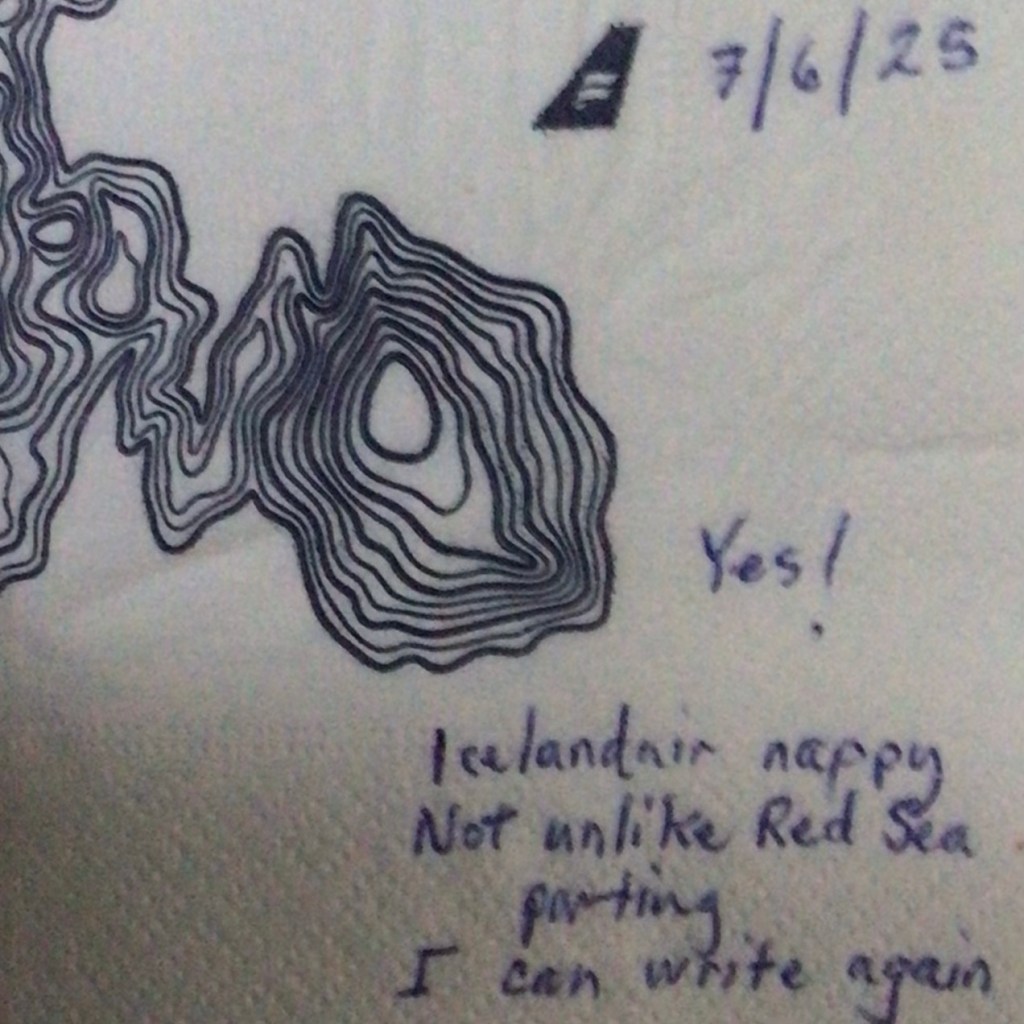
Wrong date. 😂 Obviously, still operating liminally.
We made it. Using a wheelchair for Rob yesterday through Reykjavik airport was magical. TALL Chinese/Icelandic Bjorn, newly graduated from secondary and heading to Uni, narrated our first moments in Iceland as he pushed and we sped through Immigration and luggage-retrieval. No Customs here which was a delightful surprise—first of many, I predict, non-American ways to do things. Our handsome guide delivered us onto the bus that would whisk us to our luxury hotel. There we collapsed in the Executive Lounge overlooking the city while we waited for our room. I found the best way to keep my eyes open was to finally learn to play Mah Jongg online while Rob sipped an espresso and consumed fruit and petite wafer-like cookies.
Gratefully, as I imagine what’s next and weep, I realize we have pulled out all the stops. After all, this could be our last international trip together.
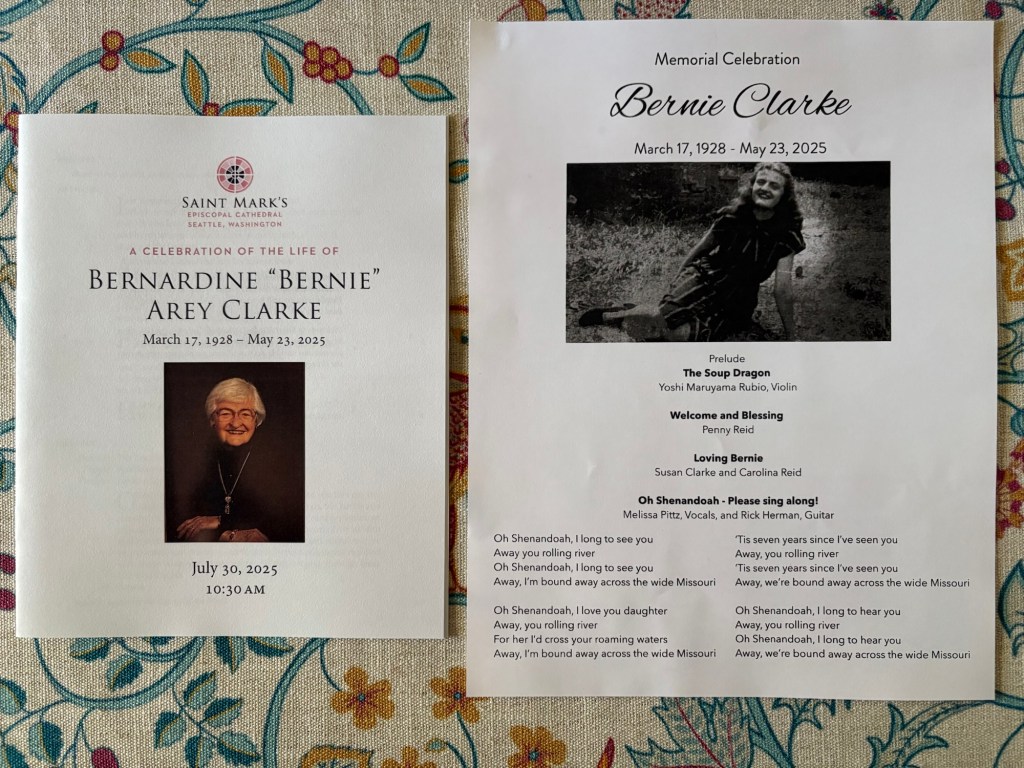
I’d been told of this Hebrew word before; in English it translates as loving kindness or tender mercy. Less than 48 sparkling hours ago, our priest Emily used it in her homily to describe my mother. My sisters and I and the throngs of oh-so-many friends and angels, living and dead, in-person and on zoom, honored Bernie in community on Wednesday at the cathedral, in our humanness and beyond.
Now I am living in soft liminal space in the wake of Mom’s Eucharist and Memorial Celebration. I think I’ll remember the meaning of hesed for the rest of my life; my desire is to notice and be it more often.
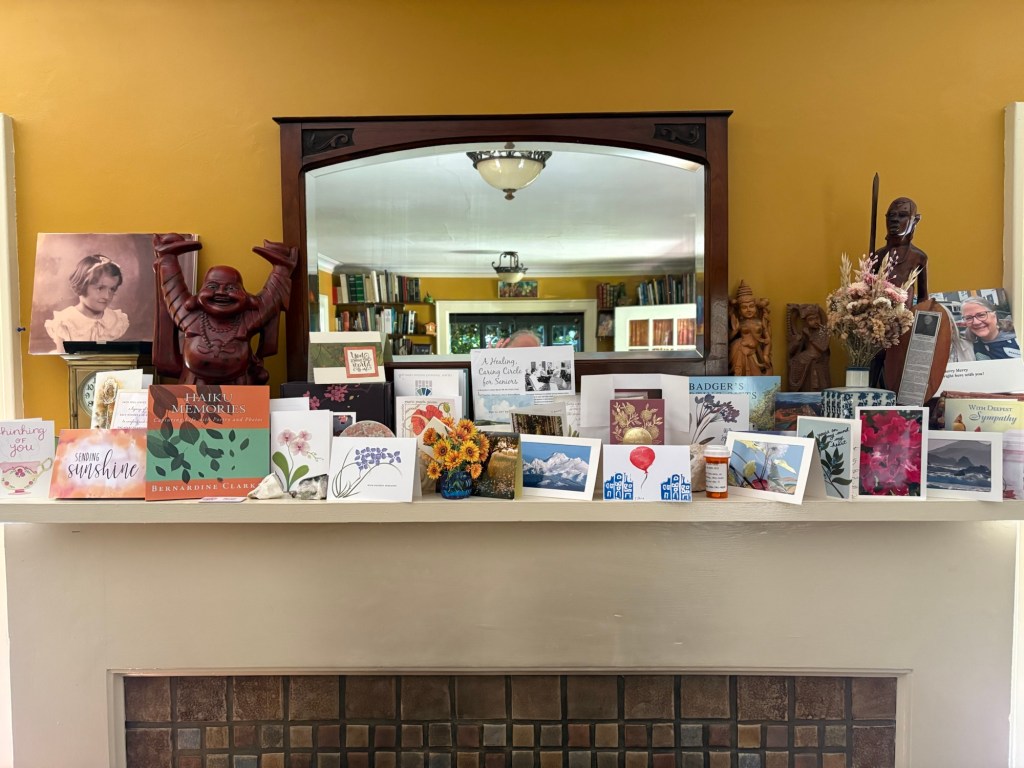
Yesterday at church I visited with Ines, Hugh and Evelyn, three babies born about the time Mom was breathing her last. Then we came home to our mantel, laden with more signs of love, seemingly ubiquitous condolences because we are well-cared-for. On some level everyone seems to know the exquisite pain of losing one’s mother.
The joy of these crossings—passing into life, passing into death after a long life—is obvious too. The diaphanous gossamer I sense has been described as a veil before God, one that thins when gazing in the faces of these new beings alongside the memory of a nearly-century-old one.
Recently, I told a friend how hard it is to initiate socially these days or even respond because my work has become local and homebound. She told me all the small and important ways I could be involved politically. Yes, I do want to make a difference. I am constantly discerning God’s path for me with that in mind.
And it all becomes clearer when I snuggle a newborn and encourage a parent. I pray this is enough during this daze of sadness and disillusion. My God, I even notice I am professionally prepared. What could be more important and a better fit, at least for now?
Seemingly eons ago, one of my daughter Carolina’s godmothers, Susan, gave me John O’Donohue’s book about spiritual friendship. She said I was an anam cara for her, one of her spiritual friends. In September, I will travel with Susan to FarmAid40, a giant concert, where Carolina will be working. Together, we will honor farmers, those who dedicate themselves to nourishing the lives of plants and animals from birth to harvest through the seasons, every year.
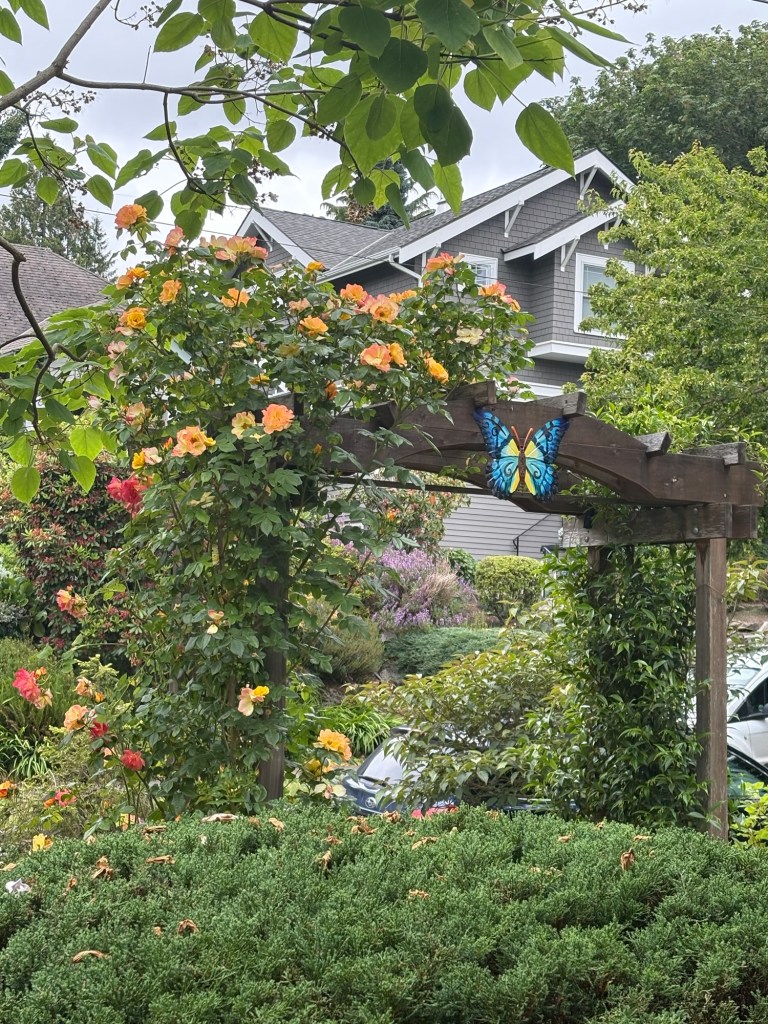
During this sad season, I am learning to garden from my chosen anam cara, my husband, Rob. At first, I panicked when I thought he would die soon and take away with him all his wonderful understanding of the first Bible, Nature. I have watched him turn our simple grassed yard into an oasis. Most recently, I have asked him to teach me. First, we asked for help, from the professional haircutters, and paid them lots of money to make it possible for me to imagine going forward later without Rob. And then just yesterday, I sowed a salad of veggie starts in the planters under our welcome arbor. Who knew that I would ever be interested enough and learn enough from Rob to do that?
During this past Fall and Winter, the harvest and slumber seasons, my pod of anam caras has expanded to these “vegetable box people,” my CSA group. In this case, the letters stand for the Center for Spirituality and Action, not the more common acronym of Community Supported Agriculture. We are a circle of 13, a group of seekers, dedicated to the practices of contemplation and now, by God’s grace, to each other.
It feels so right to me, learning to tend my CSA garden as well as the earth. As the poet explained, one’s anam cara tends to be a single being…so close they share dreams, even breath. Even long ago when I initially heard this Irish notion, I couldn’t quite imagine the singularity of such a friendship. That BFF moniker never quite fit for me anyway. After all, there’s her (that friend who comes to mind) and him and that dear one too. There are my sisters too, for Heaven’s sake. Their names all tumble out in my prayers. We have witnessed sparkles of Glory together. How could I ever judge one more worthy than the other?
Thus I am learning as I consider our CSA baker’s dozen. My heart has the capacity to expand, with God’s help, across continents and oceans as well as the small space between the two of us. Everyone in this web is precious to me, including the one who in this moment is walking past our house with his dogs, greeting the day on the other side of our front yard.
This garden of friendship I am embracing is rich in variety including the simplicity of a blade of grass alongside the depth of a rose. All is gracious. All is blessed. I am open to enjoying it all, a living dance of spirituality and action.
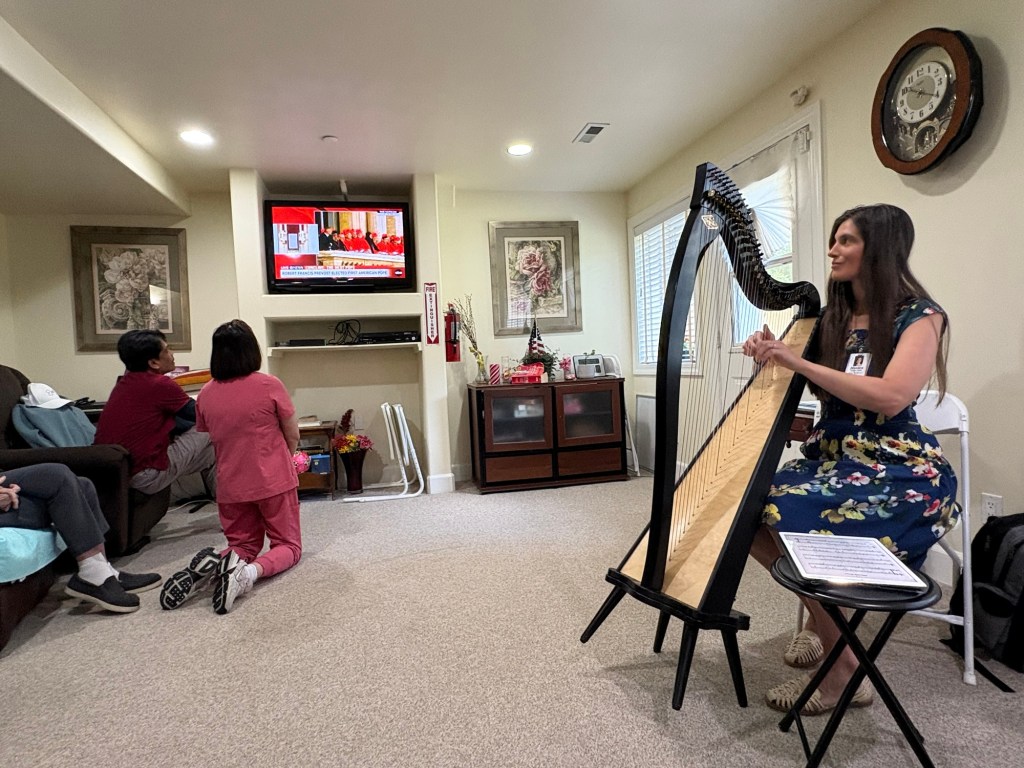
As per my spiritual director, “Your mother already has one foot in heaven.” Sometimes she shares what it’s like with everyone in her orbit and beyond. This week the hospice harpist offered us a concert in the living room of Mom’s adult family home. While she snoozed, we meditated and watched the muted TV. The white smoke billowed and the choice of Pope Leo XIV was unveiled halfway around the world. Divine. Surreal.
On these days, I still have to face a chore or two like Martha did (see Luke 10:38) but more often I am shifting and leaning in with Mary-energy. My sisters are encouraging me as they handle some of the practical heavy lifting from afar and I weep and anoint as best I can, remembering my hospice prayer:
Holy One,
In your mercy, grant Mom comfort and ease, and shower comfort and ease on all those who love and care for her.
 Always Bridging